Dairy Products in Indian Cooking: What You Need to Know
When you think of dairy products, essential ingredients in Indian cuisine that include yogurt, paneer, ghee, and milk-based sweets. Also known as milk-derived foods, they’re not just add-ons—they’re the foundation of flavor, texture, and tradition in South Indian kitchens. Skip them, and your dosa won’t crisp, your biryani won’t breathe, and your curry won’t sing. These aren’t optional extras. They’re the quiet heroes behind the dishes you love.
Paneer, a fresh, unaged cheese made by curdling milk with lemon or vinegar. Also known as Indian cottage cheese, it’s the star in paneer butter masala and tikka, holding its shape under heat while soaking up spices like a sponge. Then there’s yogurt, the tenderizer and souring agent that turns tandoori chicken juicy and dosa batter airy. Without it, your marinade stays tough and your batter stays flat. And ghee, clarified butter that’s been cooked until the milk solids caramelize. Also known as Indian clarified butter, it’s the oil of choice for frying, tempering spices, and finishing biryanis because it won’t burn and carries flavor deeper than any vegetable oil.
Dairy doesn’t stop at cheese and butter. Coconut milk, though not animal-based, acts like a dairy substitute in many South Indian curries, adding creaminess without dairy. It’s the reason your curry doesn’t split, and why some dishes feel rich even without cream. But here’s the catch: if you replace yogurt with plant-based alternatives in traditional recipes, you’ll lose the fermentation magic that makes dosa batter rise or chicken tender. These aren’t interchangeable. They’re tied to centuries of technique. You can’t fake the sour tang of fermented yogurt in idli, or the nutty depth of ghee in payasam. And if you’ve ever wondered why your chutney pairs so well with crisp dosa—it’s because the yogurt in the batter balances the chutney’s heat and acidity.
What you’ll find in these posts isn’t just recipes. It’s the real talk about what works and what doesn’t. Why your dosa turns soft? Probably your yogurt wasn’t fresh enough. Why did your curry curdle? Coconut milk was added wrong. Why does paneer hold up in gravy but halloumi doesn’t? It’s all in the dairy. You’ll learn how to pick the right yogurt, how to make ghee from scratch, why paneer needs to be soaked in warm water, and how to avoid the one mistake that ruins every batch of rasam. No fluff. No theory. Just what happens when you get dairy right—or wrong.
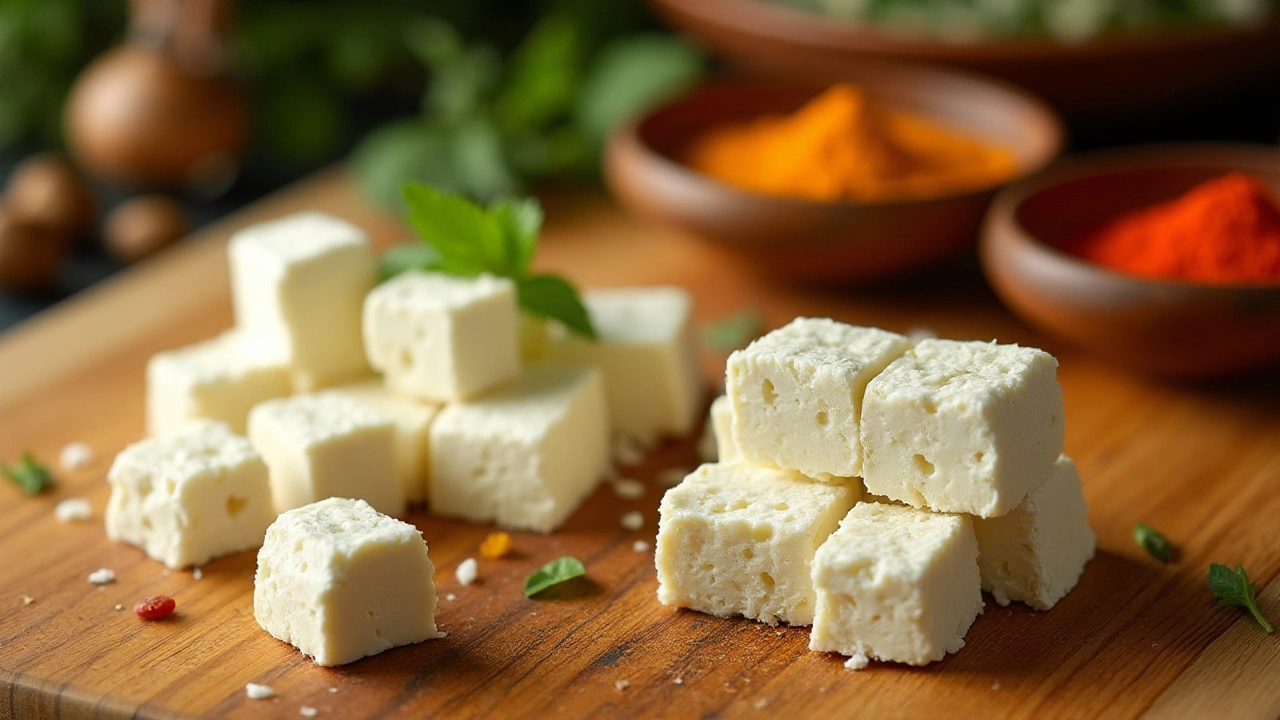
Paneer vs Malai Paneer: Unveiling Their Subtle Differences and Uses
Paneer and malai paneer, while both derived from milk, have distinct characteristics and uses in Indian cuisine. Paneer, a fresh cheese, is known for its firm texture and versatility. Malai paneer, on the other hand, is creamier and softer, often used for dishes requiring a rich texture. Learn how these two types of paneer differ in preparation, texture, and culinary applications.
learn more