Dairy in India: How Milk, Curd, and Paneer Shape Everyday Meals
When you think of dairy in India, the widespread, daily use of milk, curd, ghee, and paneer across households and street food stalls. Also known as Indian milk products, it forms the backbone of nutrition, flavor, and tradition in Indian cooking. This isn’t about fancy cheese platters or imported butter—it’s about what’s in your roti, your dal, your dosa, and your morning chai. Milk doesn’t just sit in a fridge here. It’s turned into curd by sundown, boiled into ghee over low heat, or pressed into soft paneer cubes for curry. Every village, every city, every kitchen handles dairy differently—but they all handle it daily.
Take paneer, a fresh, non-melting cheese made by curdling milk with lemon or vinegar. Also known as Indian cottage cheese, it is the star of dishes like paneer butter masala and palak paneer, and it’s made at home even in tiny apartments. You won’t find it in supermarkets like cheddar—you’ll find it in the morning market, still warm, sold by the block. Then there’s curd, fermented milk that cools the spice, aids digestion, and turns into lassi, raita, or kadhi. Also known as yogurt, it is the silent hero behind every spicy meal. And ghee, clarified butter that’s been slow-cooked until the milk solids brown and vanish. Also known as Indian clarified butter, it isn’t just for frying—it’s drizzled over rice, smeared on roti, and offered in temples. These aren’t ingredients you buy once a month. They’re part of your rhythm—morning, noon, night.
There’s a reason why dosa batter uses fermented rice and urad dal but never dairy—because dairy isn’t needed to make it rise. But the same kitchen that makes dosa will also make curd, then use that curd to cool down a spicy tomato chutney. Dairy in India doesn’t dominate every dish, but it supports nearly all of them. You’ll find it in the sweet laddoos of festivals, the creamy kheer at weddings, the sharp buttermilk drinks that cut through heat. It’s not about quantity. It’s about presence. And if you’ve ever wondered why your biryani tastes richer with a spoon of ghee, or why your dal feels softer with a dollop of curd, it’s not magic—it’s centuries of dairy wisdom.
What you’ll find below aren’t just recipes. They’re stories wrapped in milk. You’ll learn how paneer is made without a single machine, why ghee lasts for months without refrigeration, and how curd turns from simple milk into a digestive ally. These aren’t trends. They’re traditions kept alive by mothers, grandmothers, and street vendors who know that dairy in India doesn’t just feed the body—it holds the flavor of home.
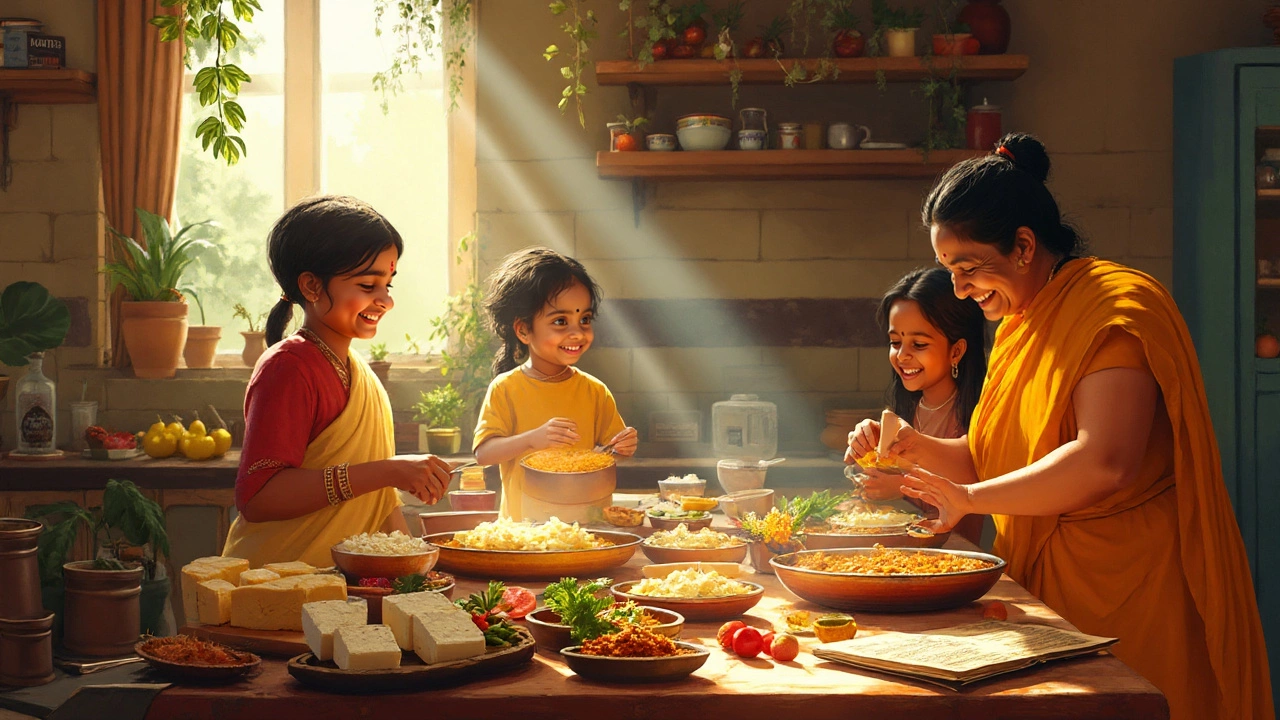
Why Cheese Isn't Big in India: Cultural, Culinary, and Historical Reasons
Explore why cheese hasn't caught on in India like paneer has—unpack the cultural, culinary, and historical reasons in a relatable, engaging way.
learn more