Curry Texture: How to Get the Perfect Consistency in Indian Curries
When you think of curry texture, the way a curry coats the spoon, clings to rice, or flows just enough to soak into bread. It's not just about taste—it's about how the sauce feels in your mouth, how it holds together, and how it behaves on the plate. A curry with the wrong texture can be watery and weak, or thick and pasty like glue. The best ones? They glide. They cling. They make you reach for another bite before you’ve even swallowed the last one.
What gives curry its texture? It’s not one thing. It’s a mix of ingredients and techniques. coconut milk, a creamy base used in South Indian and coastal curries adds richness without making things heavy—if you add it right. Too much heat, and it splits. Too early, and it loses its silkiness. Then there’s curry base, the fried onion-tomato-garlic-spice foundation that thickens as it cooks down. This is where flavor and texture meet. Slow frying pulls out moisture, caramelizes sugars, and builds body. Skip this step, and your curry tastes flat and thin.
People often try to fix texture with flour or cornstarch, but traditional Indian cooking uses natural thickeners: ground nuts, lentils, yogurt, or even roasted spices. A pinch of ground cashew paste? That’s what gives some North Indian curries their velvety finish. In the south, roasted coconut and ground poppy seeds do the same job. Even curry consistency, how thick or runny the sauce ends up changes depending on the dish. A Tamil Nadu sambar should be thin enough to pour over rice. A Punjabi butter chicken? Thick enough to sit on a spoon.
And then there’s the timing. Add tomatoes too early? They break down too much and turn the curry mushy. Wait too long to add coconut milk? It curdles. Add yogurt without tempering it? You get lumps. These aren’t mistakes—they’re lessons. Every recipe in this collection was written by someone who learned the hard way. You’ll find guides on how to fix a runny curry, how to keep coconut milk from separating, and why some curries need to simmer for hours while others are ready in 20 minutes.
Texture isn’t an afterthought. It’s the silent backbone of flavor. A curry can have all the right spices, but if the sauce doesn’t feel right, it won’t feel like home. These posts don’t just tell you what to do—they show you why it matters. Whether you’re struggling with a soggy dosa that won’t crisp up, a biryani that’s too wet, or a curry that won’t thicken no matter how long you cook it, the answers are here. No fluff. No guesswork. Just real fixes from real kitchens.
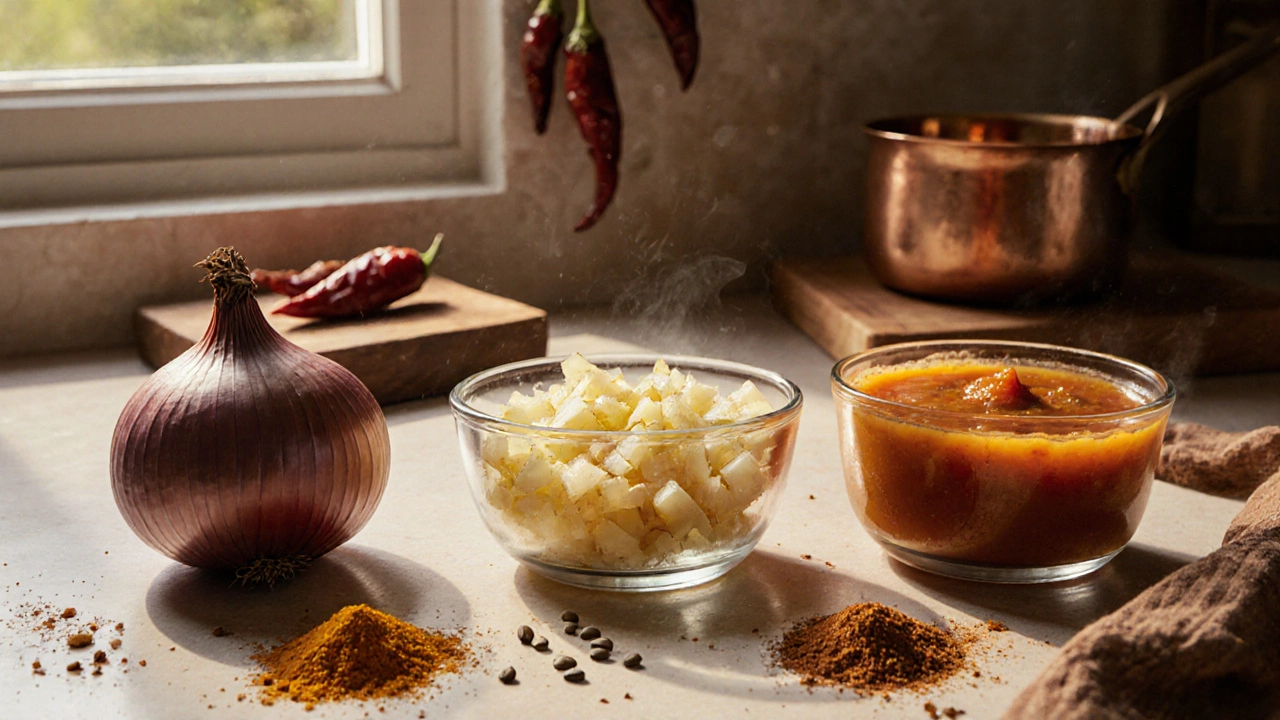
Blend Onions for Chicken Curry? When to Puree and Why
Find out when to blend onions for chicken curry, how it changes texture and flavor, and get step‑by‑step tips for perfect puree.
learn more
How to Thicken Curry: Easy Tricks for Creamier, Richer Indian Dishes
Struggling with runny curries? Learn easy tricks to thicken curry, from pantry solutions to authentic Indian techniques. Enjoy creamier, tastier results every time.
learn more