Curd in Dosa Batter: Why It Matters and How to Use It Right
When you add curd in dosa batter, a small amount of fermented yogurt used to kickstart natural fermentation in South Indian rice-lentil batter. Also known as yogurt, it’s not optional—it’s the quiet hero behind every crispy, fluffy dosa you’ve ever loved. Skip it, and your batter might take twice as long to rise—or not rise at all. Add too much, and your dosa turns sour or greasy. Get it right, and you get that perfect golden crunch with a soft, airy center.
This isn’t just about taste. fermentation, the natural process where good bacteria break down sugars in the batter, producing gas and acidity is what turns thick, bland paste into light, bubbly magic. Curd introduces active cultures that speed this up, especially in cooler climates. In Mysore, where humidity drops in winter, home cooks swear by a spoonful of curd to keep their dosa game strong. It’s not a shortcut—it’s a traditional science. And it works because urad dal, the black lentil that gives dosa its fluffiness and structure needs that acidic nudge to fully break down its proteins. Without it, the batter stays dense, even after 12 hours.
You don’t need fancy tools. Just mix in 1–2 tablespoons of fresh, room-temperature curd per cup of soaked rice and dal. Don’t use cold yogurt—it kills the good bacteria. Don’t use store-bought flavored yogurt with additives—they interfere. Plain, homemade curd is best. And yes, this ties directly to the urad dal to rice ratio you’ve heard about—1:3 is the gold standard, but even that won’t save you if your batter doesn’t ferment right. Curd helps balance the pH, which helps the enzymes in the dal do their job. It’s the glue between ingredients and outcome.
Some people think sour taste means over-fermented. Not true. Curd adds mild tang without overpowering. It’s the difference between a flat, doughy dosa and one that crackles when you bite into it. If your dosa is soft, sticky, or doesn’t spread well, check your batter first. Was there curd? Was it fresh? Was the batter left in a warm spot? These aren’t guesses—they’re fixes you can apply tonight.
Below, you’ll find real recipes and fixes from people who’ve been there—batter that won’t ferment, dosas that stick, and how to fix them without buying new ingredients. No fluff. Just what works.
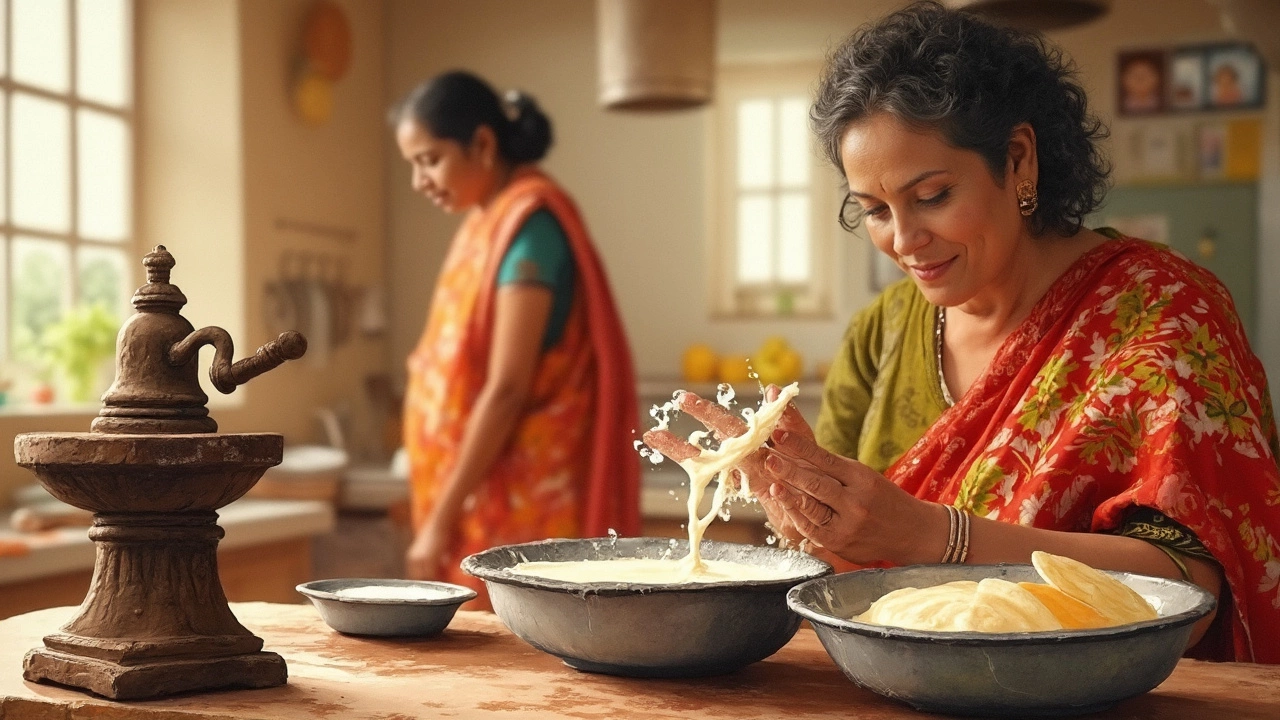
What Happens If We Add Curd to Dosa Batter? Insider Tips for Softer, Tastier Dosai
Ever wondered why some dosas turn out softer and more flavorful than others? Adding curd to dosa batter can work magic on fermentation and texture. This article unpacks the science and tradition behind using curd, with practical tips and troubleshooting tricks for every home cook. You’ll learn how to avoid common failures and make your dosas rival your favorite South Indian tiffin spot. Discover if curd is the missing secret in your dosa game.
learn more