Crispy Dosa Tips: How to Get Perfect Crunch Every Time
When you think of a crispy dosa, a thin, fermented rice and urad dal crepe from South India, known for its crisp exterior and soft interior. Also known as dosa, it’s the breakfast that turns heads in kitchens from Mysore to Minneapolis. But if yours turns out soft, sticky, or soggy, you’re not alone. The difference between a crisp, golden dosa and a flimsy one isn’t luck—it’s batter, heat, and timing.
The secret starts with the dosa batter, a fermented mix of rice and urad dal that must reach the right texture and airiness to puff and crisp. Too thick? It’ll stick. Too thin? It’ll tear. The classic 1:3 ratio of urad dal to rice isn’t just tradition—it’s science. Urad dal gives lift, rice gives structure. And fermentation? It’s not optional. If your batter doesn’t double in size and smell slightly sour after 8–12 hours, you won’t get that signature crunch. Cold kitchens kill fermentation. Use a warm spot—near the stove, in an oven with the light on, or even wrapped in a towel.
Then there’s the dosa cooking technique, the moment your batter hits the pan and transforms. Your tawa or griddle must be hot—seriously hot. Test it with a drop of water; it should sizzle and dance. Pour the batter from the outside in, using the back of a ladle to spread it thin and fast. A little oil or ghee around the edges is non-negotiable. If you’re using a non-stick pan, you’re not getting true crispness. Cast iron or carbon steel is the real deal. And don’t flip it. Let it cook until the edges lift and the surface looks dry and golden. That’s your cue.
It’s not about fancy gadgets or exotic ingredients. It’s about mastering the basics: batter consistency, fermentation, and pan heat. Skip any of these, and you’ll end up with a soft, sad dosa. But nail them, and you’ll have the kind of crispy dosa that cracks when you bite it—just like the ones you’d get on a street corner in Mysore.
Below, you’ll find real fixes from people who’ve been there: batter that won’t ferment, pans that won’t heat right, and the one trick that makes all the difference. No fluff. No guesswork. Just what works.
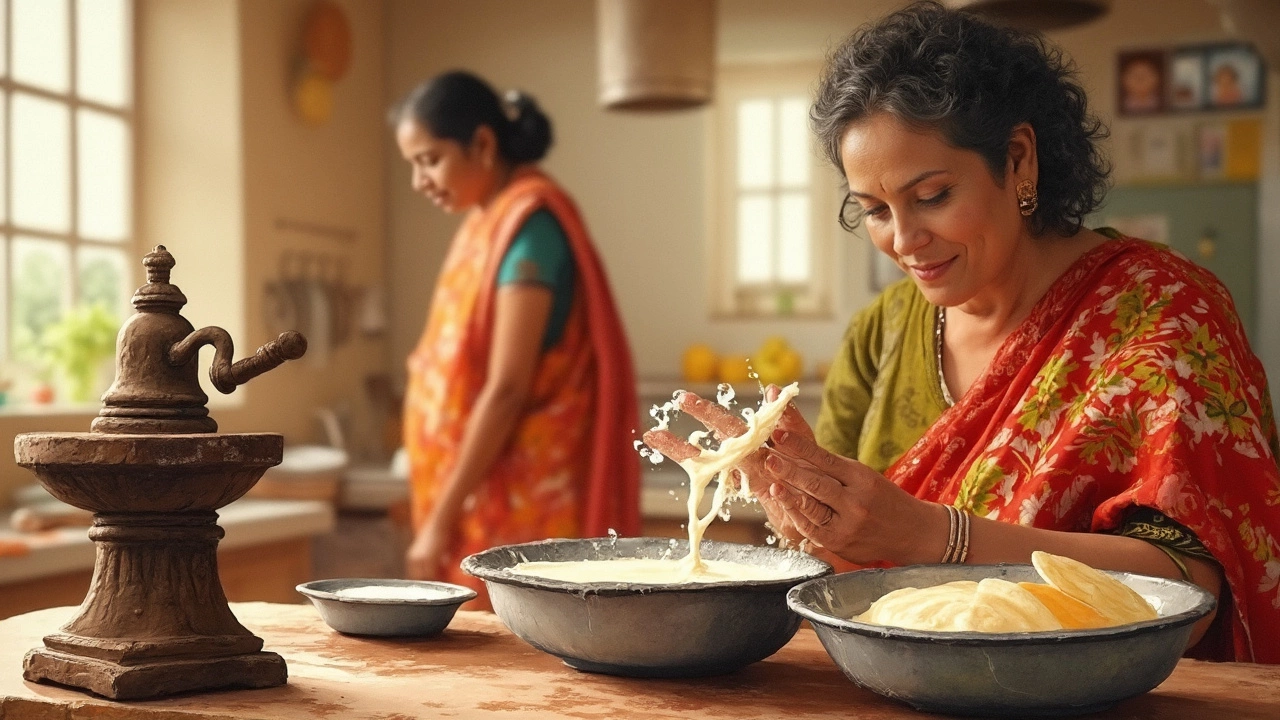
What Happens If We Add Curd to Dosa Batter? Insider Tips for Softer, Tastier Dosai
Ever wondered why some dosas turn out softer and more flavorful than others? Adding curd to dosa batter can work magic on fermentation and texture. This article unpacks the science and tradition behind using curd, with practical tips and troubleshooting tricks for every home cook. You’ll learn how to avoid common failures and make your dosas rival your favorite South Indian tiffin spot. Discover if curd is the missing secret in your dosa game.
learn more