Coconut Milk in Indian Cooking: How It Powers Flavor, Texture, and Tradition
When you think of coconut milk, a creamy liquid made from grinding coconut flesh and mixing it with water, often used as a dairy alternative in South Indian dishes. It’s not just a substitute—it’s the secret backbone of flavor in everything from spicy curries to sweet rice puddings. Also known as coconut cream when thicker, it’s the reason your dosa batter stays tender, your sambar feels luxurious, and your payasam tastes like it came straight from a Mysore kitchen. This isn’t a trendy ingredient—it’s been feeding families in Karnataka and Tamil Nadu for centuries, long before plant-based diets became a buzzword.
What makes coconut milk, a rich, fatty liquid extracted from grated coconut, used to add body and aroma to curries and desserts so special isn’t just its taste—it’s how it works with other ingredients. It softens the heat of chilies, balances the tang of tamarind, and helps spices cling to rice and lentils in ways water or dairy can’t. In curry base, the foundational mix of onions, garlic, spices, and liquids that defines the flavor profile of a dish, coconut milk doesn’t just add moisture—it adds depth. You’ll find it in every authentic Mysore-style chicken curry, in the creamy gravy of korma, and even in the batter for some regional idlis. It’s also the reason you don’t need cream in vegan dishes—the fat content alone delivers that silky mouthfeel.
But here’s the thing: not all coconut milk is the same. Canned versions vary in thickness, and homemade coconut milk behaves differently than store-bought. Some recipes call for the thick first extract, others for the thinner second press. In South Indian cuisine, the regional cooking style from Karnataka, Tamil Nadu, Andhra Pradesh, and Kerala, known for its use of rice, lentils, coconut, and tamarind, this distinction matters. A thin coconut milk might be used in rasam for lightness; the thick kind goes into avial or coconut chutney. And if you’re out of it? You can swap it with cashew paste or even yogurt in a pinch—but you’ll lose that unmistakable tropical aroma.
You’ll also notice it in desserts. In Mysore, coconut milk isn’t just for savory dishes—it’s the base for payasam, the sweet rice pudding served at festivals. It’s mixed with jaggery, cardamom, and fried nuts to make a dessert that’s rich but not cloying. Even in breakfasts like neer dosa, it’s sometimes added to the batter for a hint of sweetness and a softer texture. And if you’ve ever wondered why your homemade chutney tastes flat? Chances are, you skipped the coconut milk.
This collection of posts doesn’t just mention coconut milk—it shows you how it’s used, why it’s chosen, and how to make the most of it. Whether you’re troubleshooting a soft dosa, building a curry from scratch, or trying to recreate a childhood sweet, you’ll find real, tested tips here. No guesswork. No fluff. Just what works in kitchens across Mysore—and how you can use it in yours.
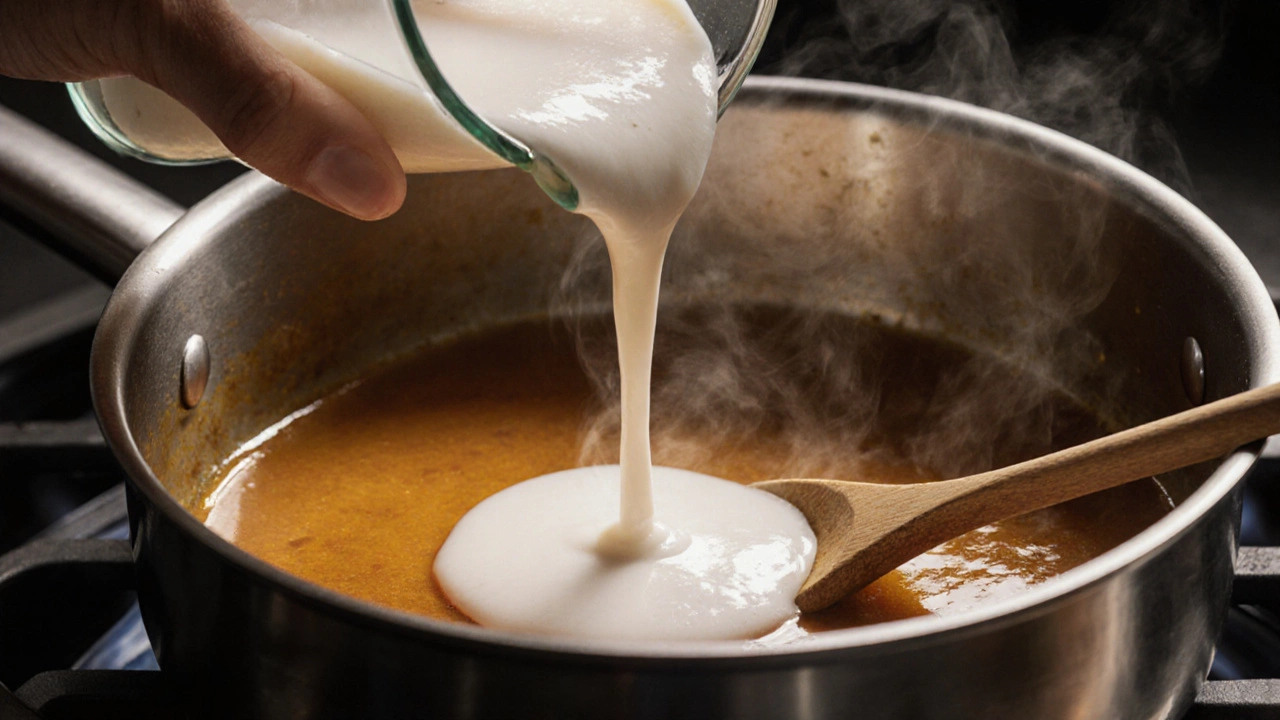
How to Add Coconut Milk to Curry Without Curdling - Simple Tips
Learn proven steps to add coconut milk to chicken curry without curdling, covering heat control, timing, thickeners, and quick fixes for a smooth sauce.
learn more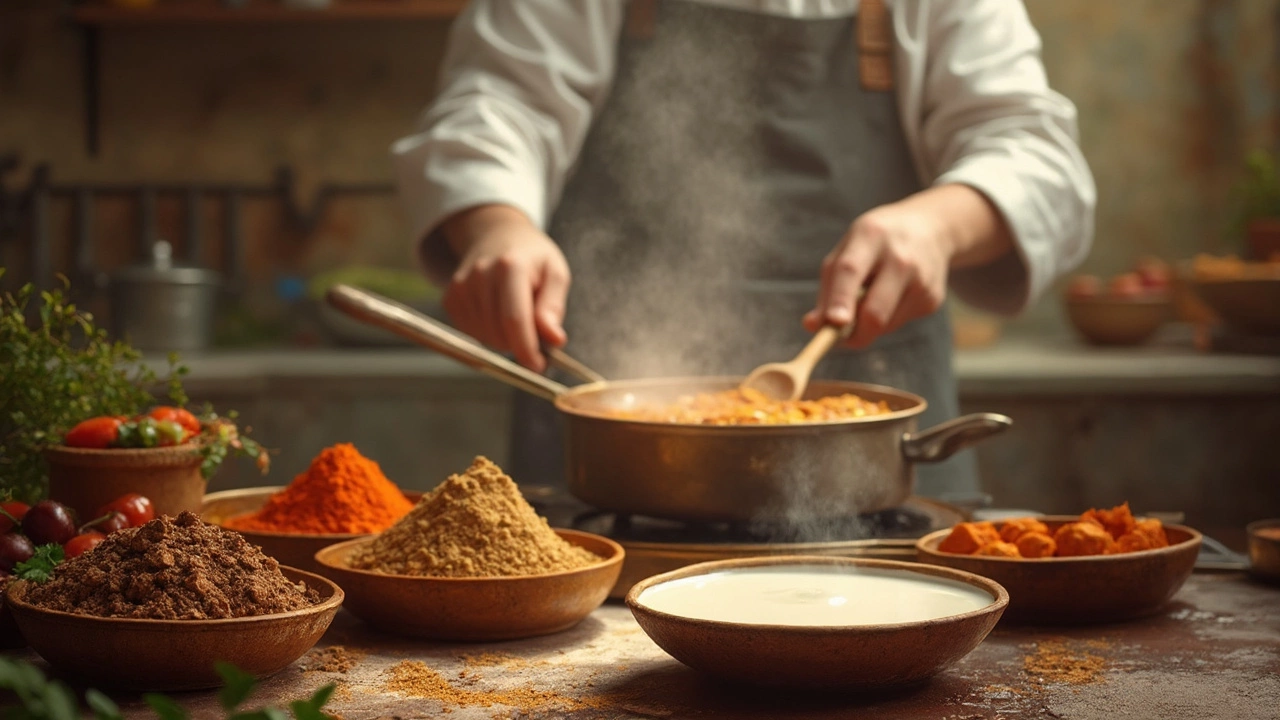
When to Add Coconut Milk to Your Chicken Curry
Making chicken curry with coconut milk can elevate the flavor to new heights. But the timing of adding coconut milk is crucial for balancing taste and texture. Learn when is the best moment to incorporate it, tips on adjusting its richness, and how it complements spices. This guidance will transform your curry-making experience into a flavorful success.
learn more