Chutney Storage: How to Keep Your Chutney Fresh and Flavorful
When you make chutney, a tangy, spicy condiment made from fruits, vegetables, herbs, and spices, commonly used in Indian meals. Also known as Indian condiment, it’s the secret punch that lifts dosas, idlis, and samosas from good to unforgettable. But if you don’t store it right, that bright flavor fades fast. Chutney isn’t just a side—it’s a living mix of vinegar, sugar, oil, and spices that can spoil, ferment too much, or lose its zing if left in the wrong jar on the counter.
Storage isn’t just about putting it in the fridge. The container, the material and seal used to hold food, critical for preventing contamination and oxidation matters. Glass jars with tight lids are best. Plastic can absorb smells and leach chemicals over time. Metal? Never. The acid in tamarind or lemon will react with it and ruin the taste. And don’t just dump your chutney in a big jar and dig in with a wet spoon—that’s how mold starts. Always use a clean, dry spoon. Even a tiny bit of water introduces bacteria that multiply fast in sweet, acidic environments.
The shelf life, how long a food remains safe and tasty under proper storage conditions depends on what’s in it. Coconut chutney with no preservatives lasts 3–4 days in the fridge. Mango or tamarind chutney with lots of sugar and vinegar? It can last 3–4 months if sealed tight. Freezing works too—portion it into ice cube trays, then transfer to a bag. Pop a cube into curry or dal when you need a flavor boost. The key is consistency: if it looks moldy, smells off, or separates badly, toss it. No second chances with homemade condiments.
Some people think refrigeration kills flavor. It doesn’t. It protects it. Heat and light are the real enemies. Keep your chutney away from the fridge door where temperature swings happen. A back shelf, dark and steady, is ideal. And if you’re making a big batch, label it. Write the date and ingredients. You’ll thank yourself later when you’re wondering if that jar is from last week or last month.
What you’ll find below are real, tested tips from people who make chutney daily—how to fix watery chutney, why some recipes need oil on top, how to tell if fermentation is good or bad, and which chutneys can stay out for a day and which can’t. No fluff. Just what works in a real kitchen, with real ingredients, for real meals.
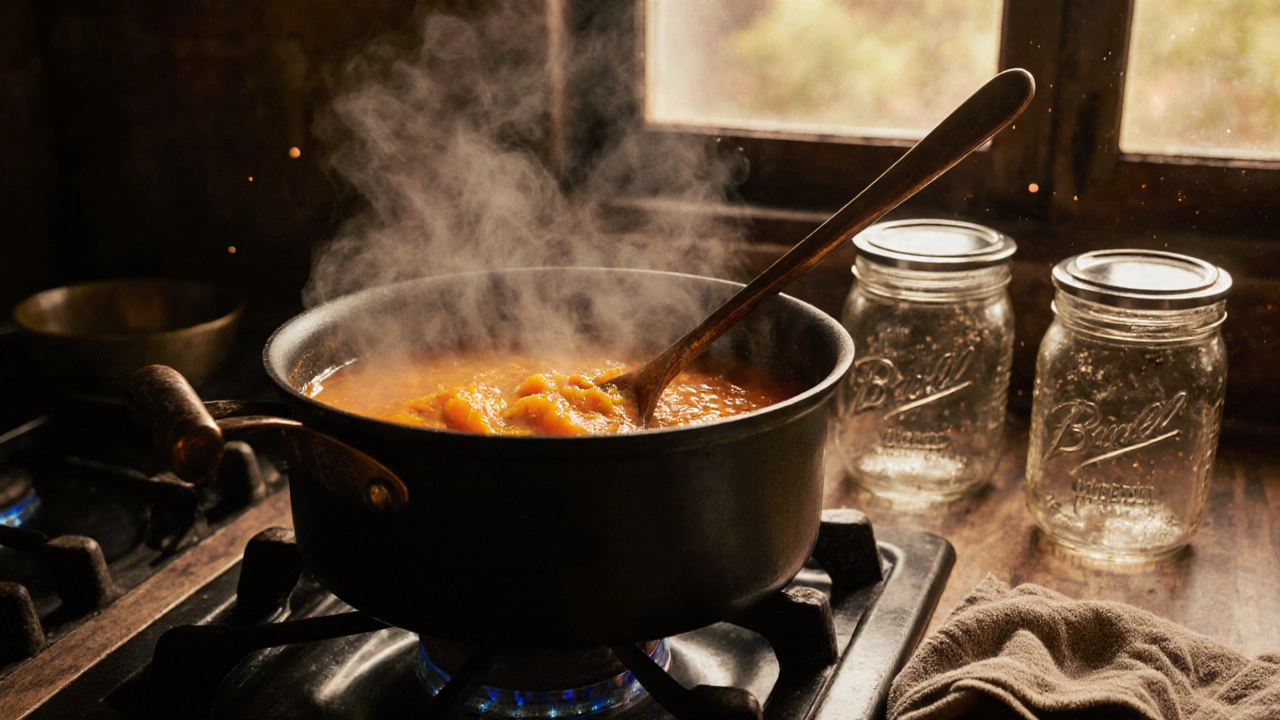
Do Chutneys Need to Cool Before Putting in Jars? The Right Way to Store Homemade Chutney
Learn the right way to jar homemade chutney-why cooling it slightly before sealing matters for safety, flavor, and shelf life. Avoid spoilage and get perfect seals every time.
learn more
How Long Does Homemade Chutney Last in a Jar? Storage Tips That Actually Work
Homemade chutney lasts 3-6 weeks in the fridge and up to a year if properly canned. Learn how to store it safely, spot spoilage, and extend its shelf life with vinegar, sugar, and proper jars.
learn more