Chutney Preservation: How to Keep Indian Chutneys Fresh Longer
When you make a batch of chutney, a tangy, spicy condiment from South Indian kitchens, often made with coconut, tamarind, chili, or mint. Also known as chatni, it’s the flavor booster that turns idli, dosa, or even toast into something unforgettable. But if you’ve ever let a jar sit too long, only to find mold or a flat, sour taste, you know chutney preservation isn’t optional—it’s essential.
Good chutney isn’t just about blending ingredients. It’s about controlling moisture, acidity, and temperature. The key players? tamarind, a sour fruit pulp that naturally lowers pH and acts as a preservative, oil, a barrier that blocks air and bacteria, and salt, the oldest and most reliable antimicrobial agent in Indian kitchens. These aren’t optional extras—they’re the reason your coconut chutney lasts two weeks instead of two days.
Most people store chutney in glass jars without thinking, but that’s only half the battle. Did you know that cooling chutney before storing it? Hot chutney creates steam inside the jar, which turns to water and invites mold. Always let it sit at room temperature for 30 minutes first. And never use a wet spoon—always dry it before dipping. One damp spoon can ruin a whole jar.
Not all chutneys are the same. Mint and coriander chutneys, with their high water content, need refrigeration and last about a week. Coconut chutney, with its oil and salt, can sit in the fridge for three weeks. Tomato and tamarind chutneys? They’re the toughest—some last months if you cook them down thick and seal them hot. The trick is texture: the thicker the chutney, the longer it holds up. Water is the enemy. Oil is your friend.
You don’t need fancy gadgets. A clean, dry, airtight jar—preferably with a tight-sealing lid—is all you need. Some people freeze chutney in ice cube trays. That’s smart. One cube equals one serving. Pop it out, thaw it in the fridge overnight, and it tastes just made. No preservatives, no chemicals, just real flavor.
And don’t confuse chutney with salsa. While they look alike, salsa is meant to be eaten fresh. Indian chutney is built to last. That’s why traditional recipes use roasted spices, sun-dried ingredients, and generous oil. It’s not just taste—it’s survival. Centuries of kitchen wisdom built this system, not because people liked being careful, but because they had to be.
Below, you’ll find real fixes from real kitchens: how to tell if your chutney has gone bad, why your mint chutney turns brown overnight, what oil works best, and how to store it without losing that bright, fresh bite. No theory. No fluff. Just what works.
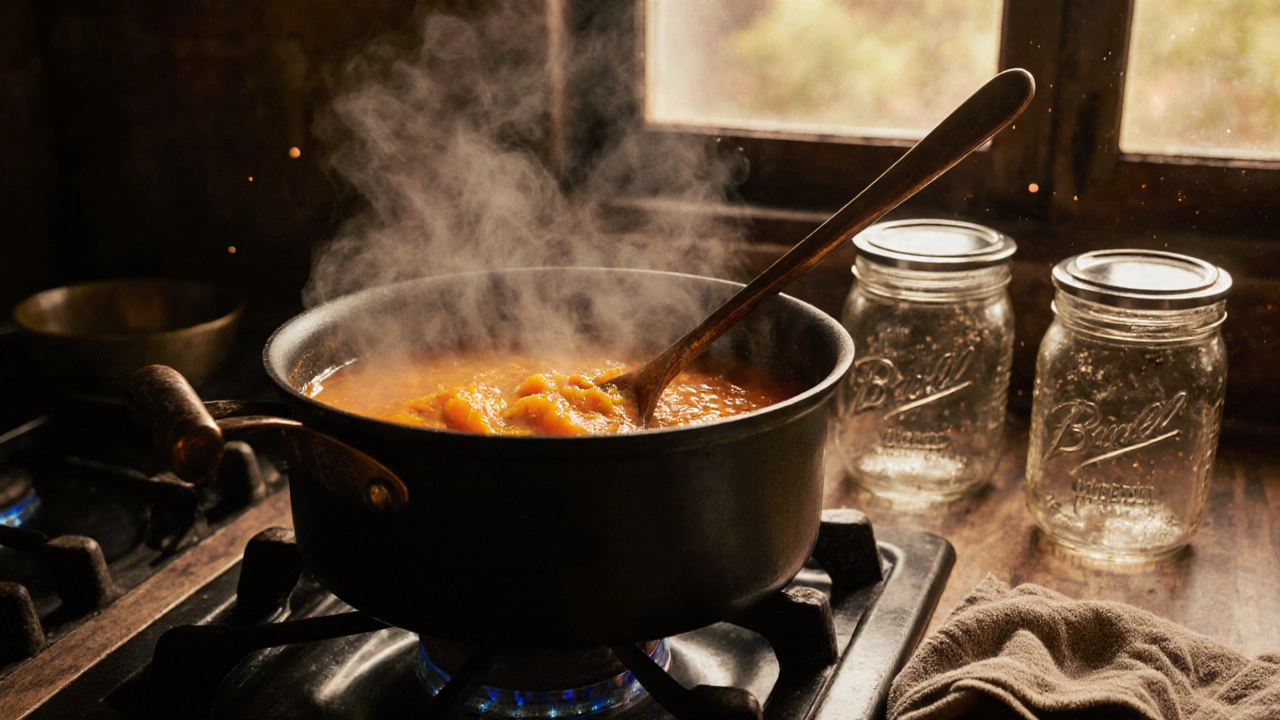
Do Chutneys Need to Cool Before Putting in Jars? The Right Way to Store Homemade Chutney
Learn the right way to jar homemade chutney-why cooling it slightly before sealing matters for safety, flavor, and shelf life. Avoid spoilage and get perfect seals every time.
learn more
How Long Does Homemade Chutney Last in a Jar? Storage Tips That Actually Work
Homemade chutney lasts 3-6 weeks in the fridge and up to a year if properly canned. Learn how to store it safely, spot spoilage, and extend its shelf life with vinegar, sugar, and proper jars.
learn more