Carrots in Indian Cooking: How This Veggie Powers Flavors Across Mysore Recipes
When you think of carrots, a sweet, crunchy root vegetable used widely in Indian kitchens for both savory and sweet dishes. Also known as gajar, it isn’t just a garnish or a side—it’s a quiet hero in Mysore’s cooking. You’ll find it simmered in lentil stews, grated into dosa batter for subtle sweetness, slow-cooked in biryani for texture, and even turned into a spiced dessert called gajar ka halwa. It’s not flashy, but without carrots, many classic South Indian dishes would lose their balance.
Carrots work because they bring natural sugar to dishes that need it—like when you’re balancing the heat of green chilies in a curry or cutting through the richness of ghee in a biryani. In Mysore, where meals are built layer by layer, carrots often go in early, fried with mustard seeds and curry leaves to unlock their sweetness before adding other ingredients. They’re also a go-to for vegetarian families who want to sneak in nutrition without changing the flavor profile. And unlike some veggies that turn mushy, carrots hold their shape even after long cooking, giving dishes body without falling apart. Related to this are curry bases, the foundational mix of onions, tomatoes, spices, and sometimes carrots that form the soul of Indian curries, where carrots add depth without overpowering. You’ll also see them paired with chutneys, tangy, spicy condiments made from coconut, tamarind, or lentils that often include grated carrot for texture and sweetness, especially in breakfasts like idli and dosa.
What’s surprising is how often carrots show up in dishes you wouldn’t expect. In some Mysore households, a handful of grated carrot goes into the batter for sweet pongal or even in the filling for savory vadas. They’re not just for color—they’re for taste, texture, and tradition. And because they store well, they’re a year-round ingredient in homes where fresh produce isn’t always easy to come by. Whether you’re making a simple carrot dal or a festive gajar ka halwa with cardamom and nuts, this humble root is doing heavy lifting behind the scenes.
Below, you’ll find real recipes and fixes from home cooks in Mysore—how to use carrots in dosa batter without making it soggy, why some curry recipes call for frying them first, and how to avoid turning your carrot halwa into a sticky mess. These aren’t fancy chef tips. These are the tricks passed down through generations, the kind you learn when you watch your grandmother stir the pot and say, "Add the carrot now, not later."
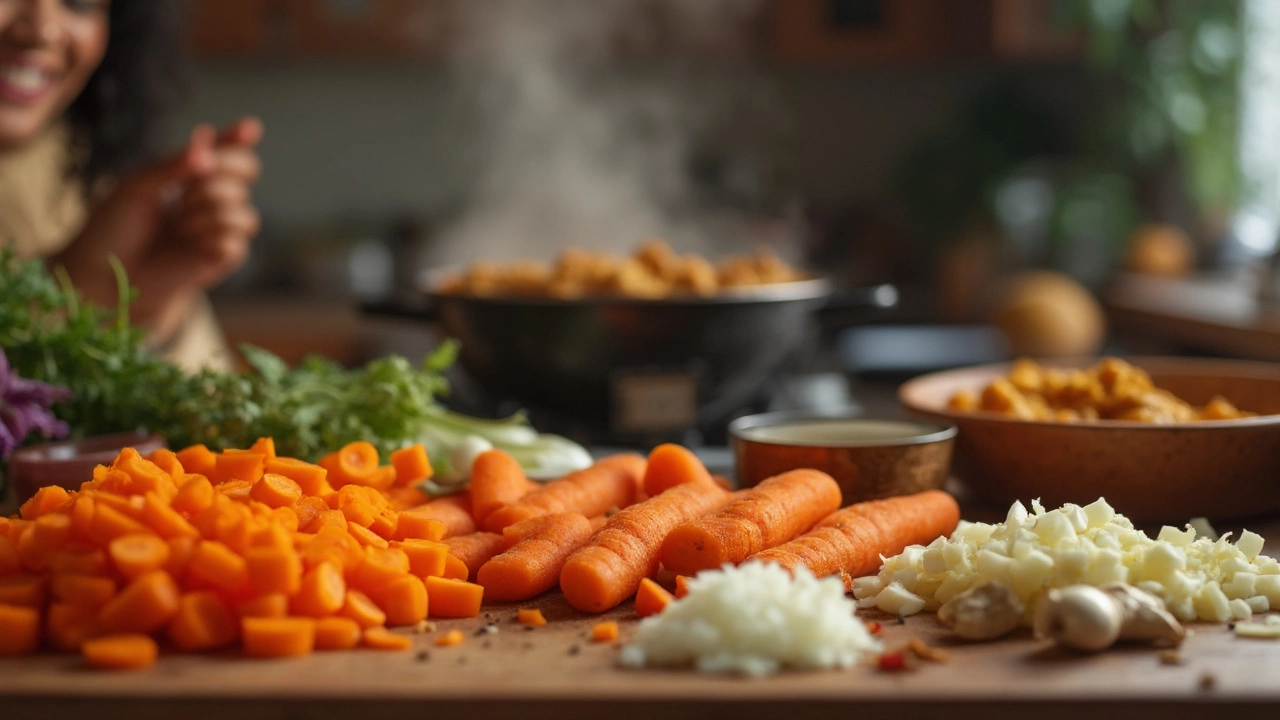
Should I Boil Carrots Before Adding to Chicken Curry?
Ever wondered if you should boil carrots before tossing them into your chicken curry? This article digs deep into the role carrots play in curry, whether parboiling really matters, and how to get perfect texture. You’ll learn how timing and cut size affect tenderness, plus get my go-to tricks for prepping busy weeknight curries. Save yourself from mushy or undercooked carrots with advice that actually works.
learn more