Biryani Rice Cooking Time: How Long to Cook Rice for Perfect Biryani
When you're making biryani rice cooking time, the precise duration rice needs to absorb flavor and stay separate before layering in the dum pot. Also known as parboiling time for biryani, it's not just about boiling—it’s about preparing rice that holds its shape while soaking up spices, ghee, and aroma. Get this wrong, and your biryani turns mushy or crunchy. Get it right, and each grain sings with flavor.
The basmati rice for biryani, a long-grain aromatic rice native to the Indian subcontinent, prized for its fragrance and ability to stay separate when cooked needs to be soaked for 30 minutes, then boiled for just 7 to 8 minutes. That’s it. Not 10, not 12. You want it 70% cooked—firm to the bite, not soft. Why? Because the rice finishes cooking slowly in the pot during dum cooking, absorbing steam and spice oils without falling apart. If you boil it too long, it turns to paste under the weight of meat, yogurt, and saffron. If you undercook it, you’ll get hard centers that ruin the whole dish.
Many people skip the soak or use the wrong rice. That’s why their biryani sticks or tastes bland. dum cooking, a slow-steaming method where the pot is sealed and cooked over low heat, allowing flavors to meld without stirring is the secret, but it only works if the rice is prepped right. You don’t need fancy tools—just a heavy pot, a tight lid, and patience. The rice should be tossed with a little ghee and whole spices like cardamom and cloves before layering. That’s how flavor gets inside each grain, not just on top.
Check your rice by pressing a grain between your fingers. If it bends but doesn’t snap, you’re good. If it crushes easily, you’ve gone too far. Most recipes say "cook until half-done," but that’s vague. In practice, that’s 7 minutes in boiling salted water with a pinch of salt and a teaspoon of oil. Drain it immediately. Don’t rinse. Rinsing washes away the starch that helps the rice cling gently to the spices later.
This isn’t about following a timer blindly. It’s about understanding how heat, starch, and moisture interact. The same rice that takes 15 minutes to fully cook in a pot needs only half that time before dum cooking. And that’s the trick most blogs miss. It’s not the total cooking time that matters—it’s the stage you stop at before the final steam.
Below, you’ll find real-tested advice from people who’ve made biryani for decades. No fluff. No guesswork. Just what works: how to time the rice, what to do if you’re short on time, why some people use a pressure cooker (and when not to), and how to fix rice that’s already too soft. These aren’t tips from chefs in fancy kitchens—they’re from home cooks in Mysore, Hyderabad, and Bangalore who’ve fed families for generations. You’ll learn what to avoid, what to watch for, and how to make biryani rice that’s perfectly fluffy every single time.
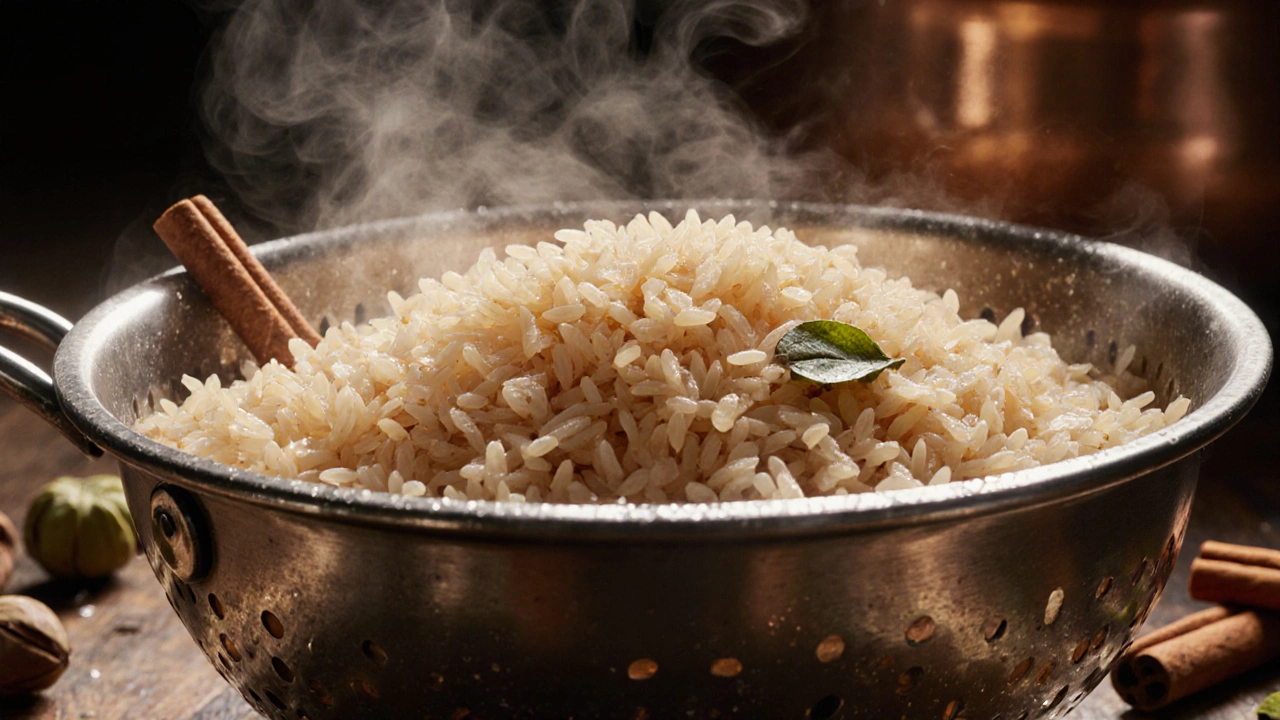
How Long to Boil Rice for Biryani? Perfect Timing for Fluffy, Fragrant Grains
Learn the perfect 7-8 minute parboiling time for basmati rice in biryani. Avoid mushy or hard grains with this step-by-step guide to fluffy, fragrant rice every time.
learn more