Biryani Etiquette: How to Eat, Serve, and Respect This Iconic Dish
When you sit down to a plate of biryani, a layered rice dish from South Asia, often made with spiced meat, saffron, and basmati rice, you’re not just eating a meal—you’re taking part in a tradition that’s been passed down for generations. Biryani isn’t just food; it’s a ritual. Whether it’s served at a family gathering, a wedding, or a quiet Sunday dinner, how you handle it matters. Skip the fork if you can. Use your fingers. That’s not messy—it’s how it’s meant to be eaten.
Serving biryani, the way it’s presented can say as much as the flavor does. Traditionally, it’s layered in a heavy pot called a deg, sealed with dough, and slow-cooked. When it’s time to serve, the seal is broken at the table—sometimes with a flourish. That’s not for show. It’s part of the experience. The steam rising as the lid comes off? That’s the aroma you’ve been waiting for. Don’t dig in right away. Let it sit for a minute. Let the flavors settle. And never, ever mix it all together before tasting. Biryani is built in layers—each one has its own taste. Stirring it up too early ruins the balance.
Eating biryani, the proper way involves patience and respect for the ingredients. Start with the top layer—the rice, the saffron threads, the fried onions. Taste it plain. Then, take a bite with a piece of meat. Try it with a spoon of raita on the side. That cool yogurt isn’t just a garnish—it’s there to balance the heat. And if you’re in a group, don’t grab from the center. Take from the edges first. It’s polite. It’s practical. It keeps the dish looking whole for everyone else.
There’s no rulebook, but there are unwritten customs. In some homes, biryani is served only on special days. In others, it’s a Friday night staple. In some places, it’s eaten with a spoon. In others, fingers are the only tool allowed. What’s consistent? No one eats biryani in a rush. It’s meant to be savored. You don’t just eat it—you experience it. The smell, the texture, the way the spices cling to your fingers after—those are the memories that stick.
And don’t get fooled by the fancy restaurants that serve it on plates with forks. That’s not wrong—it’s just different. The real etiquette isn’t about where you eat it. It’s about how you treat it. If you’re cooking biryani, don’t skimp on the ghee. Don’t rush the dum. Don’t skip the rose water or kewra. Those aren’t extras. They’re part of the soul of the dish. If you’re eating it, don’t complain about the spice. Don’t ask for ketchup. That’s not the point. Biryani doesn’t need fixing. It needs understanding.
What you’ll find below isn’t a list of dos and don’ts. It’s a collection of real stories, tips, and fixes from people who’ve cooked, served, and eaten biryani for years. From why lemon is added at the end, to how long to parboil the rice, to how to fix a too-spicy batch—these posts aren’t about perfection. They’re about getting it right, your way. Whether you’re new to biryani or you’ve been eating it since childhood, there’s something here that’ll make your next plate better.
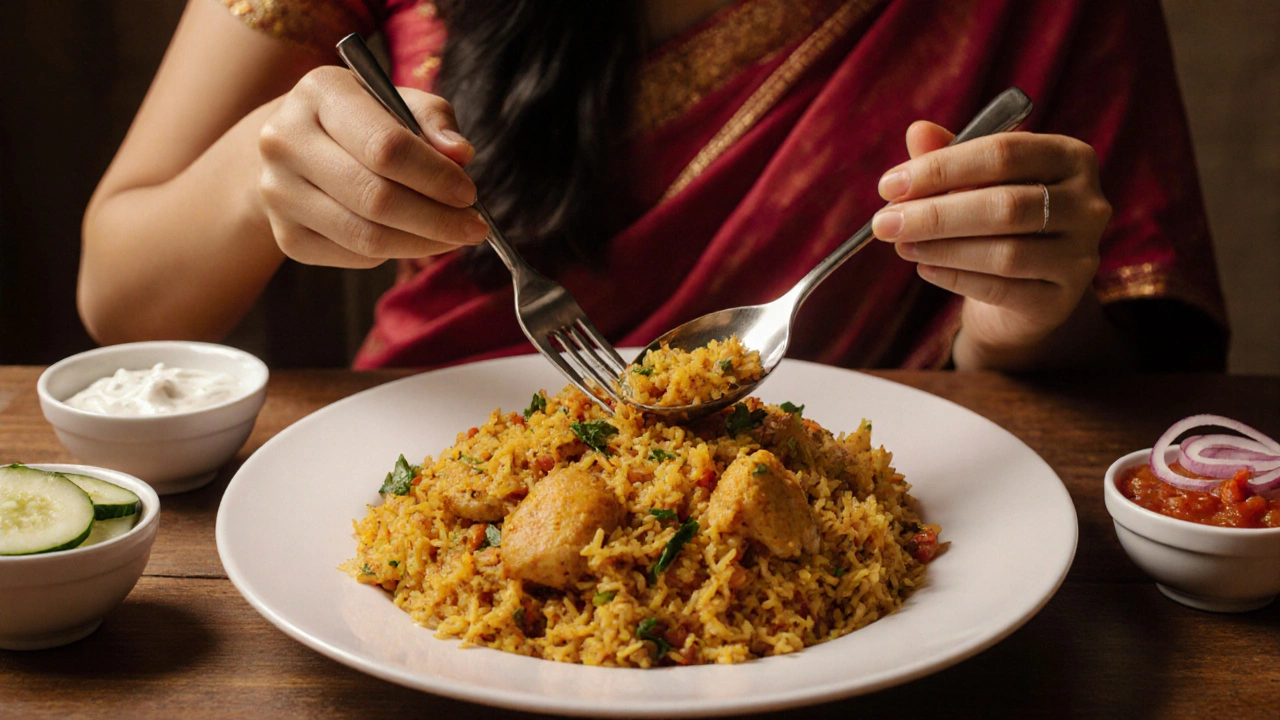
How to Properly Eat Biryani: Etiquette, Tips & Side Dishes
Learn the proper way to eat biryani, from utensil choices and side dishes to step‑by‑step etiquette, plus pro tips and common mistakes to avoid.
learn more