Biryani Cooking Tips: Master Flavor, Rice, and Spice Like a Pro
When you’re making biryani, a layered rice dish from South India known for its aromatic spices, tender meat, and fragrant basmati rice. It’s not just about throwing ingredients together—it’s about timing, technique, and trust in simple traditions. Skip the shortcuts. The best biryani doesn’t come from fancy gadgets or expensive spices. It comes from knowing when to parboil the rice, how much lemon to squeeze, and why you should never stir it after layering.
Parboiling rice, the first step to perfect biryani grains that stay separate and fluffy isn’t optional. Boil it for just 7 to 8 minutes—no more, no less. Overcook it, and your biryani turns mushy. Undercook it, and you’ll be chewing hard grains halfway through dinner. The same goes for biryani spice, a blend of cumin, cardamom, cloves, and bay leaves that builds depth, not heat. Too much chili? It drowns the aroma. Too little? It tastes flat. Balance isn’t about guesswork. It’s about tasting as you go and adjusting with salt, lemon, or a pinch of sugar.
Lemon in biryani, a small but powerful trick isn’t there to make it sour. It cuts through the richness of ghee and meat, wakes up the spices, and keeps each grain of rice from sticking together. A squeeze before layering, a final drizzle on top—this is what turns good biryani into something you remember.
What most people get wrong about biryani
Many think biryani needs hours of marinating or slow-cooked meat to be good. But the truth? The real magic happens in the last 20 minutes, when the pot is sealed and left to steam. That’s called dum cooking—trapping heat and aroma so the rice absorbs every drop of flavor. You don’t need a special pot. A heavy lid and a towel wrapped around the edge work just fine.
And don’t confuse biryani with pulao. One is layered, slow-steamed, and built for depth. The other is mixed and cooked all at once. Biryani is a ritual. Every step matters—from soaking the rice to letting the meat rest before adding it to the pot. You can’t rush it. But you don’t need to be a chef to get it right. Just follow the rhythm.
Below, you’ll find real fixes for real problems: why your rice turns sticky, how to fix an over-spiced batch, what to do if you forgot the lemon, and why your biryani smells great but tastes bland. These aren’t theory—they’re the tips used in homes across Mysore, passed down because they work. No fluff. No jargon. Just what you need to make biryani that tastes like it came from a kitchen that’s been making it for generations.
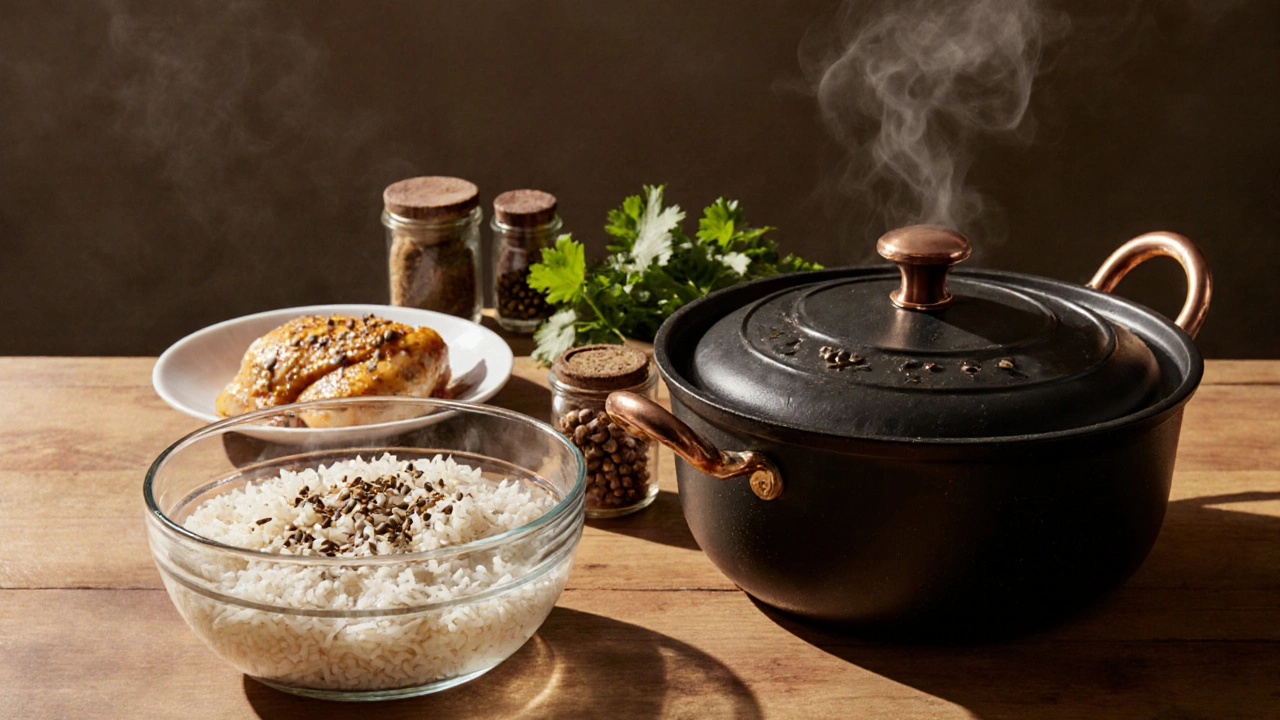
Why Biryani Takes Long to Cook - The Science, Steps & Speed‑Up Tips
Discover why biryani cooking takes time, the science behind each step, and practical shortcuts to speed up the process without losing flavor.
learn more