Biryani Cooking Time: How Long It Really Takes to Get Perfect Rice and Meat
When you’re making biryani cooking time, the total duration from prep to serving that determines whether your rice is fluffy or mushy, and your meat tender or tough. It’s not just a number on a clock—it’s a rhythm of steps that includes parboiling, layering, and slow steaming. Most people think biryani takes hours, but the truth? The real magic happens in the last 20 minutes, after all the prep is done.
What most recipes don’t tell you is that biryani rice prep, the process of partially cooking basmati rice before layering it with meat and spices is where timing matters most. Boil the rice for just 7 to 8 minutes—it should be 70% cooked, still firm in the center. Too long, and it turns to mush when it steams later. Too short, and you’ll end up with crunchy grains in the final dish. This step alone can make or break your biryani, no matter how good your spices are.
Then there’s dum cooking, the sealed slow-steaming technique that lets flavors meld without stirring. This is where biryani gets its soul. Once you layer the rice and meat, cover the pot with dough or a tight lid, and cook on low heat for 20 to 30 minutes. That’s it. No need to stir. No need to rush. The steam does the work, pulling the ghee, spices, and herbs into every grain. Skip this, and you’re just eating spiced rice with meat—no depth, no aroma, no biryani.
The spices? They’re not the clock. You can’t speed up the release of flavor from cardamom, cloves, or saffron. But you can ruin them by adding them too early or burning them in hot oil. Add whole spices to hot ghee at the start, let them sizzle for 30 seconds, then move on. Save ground spices for later, when you’re layering. And don’t forget the finishing touch—saffron milk drizzled on top just before sealing the pot. That’s when the fragrance wakes up.
People ask, "Why does my biryani take so long?" It’s not because the recipe is complicated. It’s because they’re trying to rush the science of steam, starch, and spice. You can’t force the rice to absorb flavor faster. You can’t skip fermentation in the yogurt marinade and still get tender meat. You can’t use a pressure cooker for the dum step and expect the same result. Biryani cooking time isn’t a suggestion—it’s a sequence.
Below, you’ll find real guides from people who’ve made this dish dozens of times. Some will show you exactly how long to parboil rice for perfect texture. Others will explain why lemon juice before steaming keeps the grains separate. One will break down why your meat stays chewy if you skip the slow simmer. These aren’t theories. These are fixes from kitchens where biryani is made every week, not just for holidays.
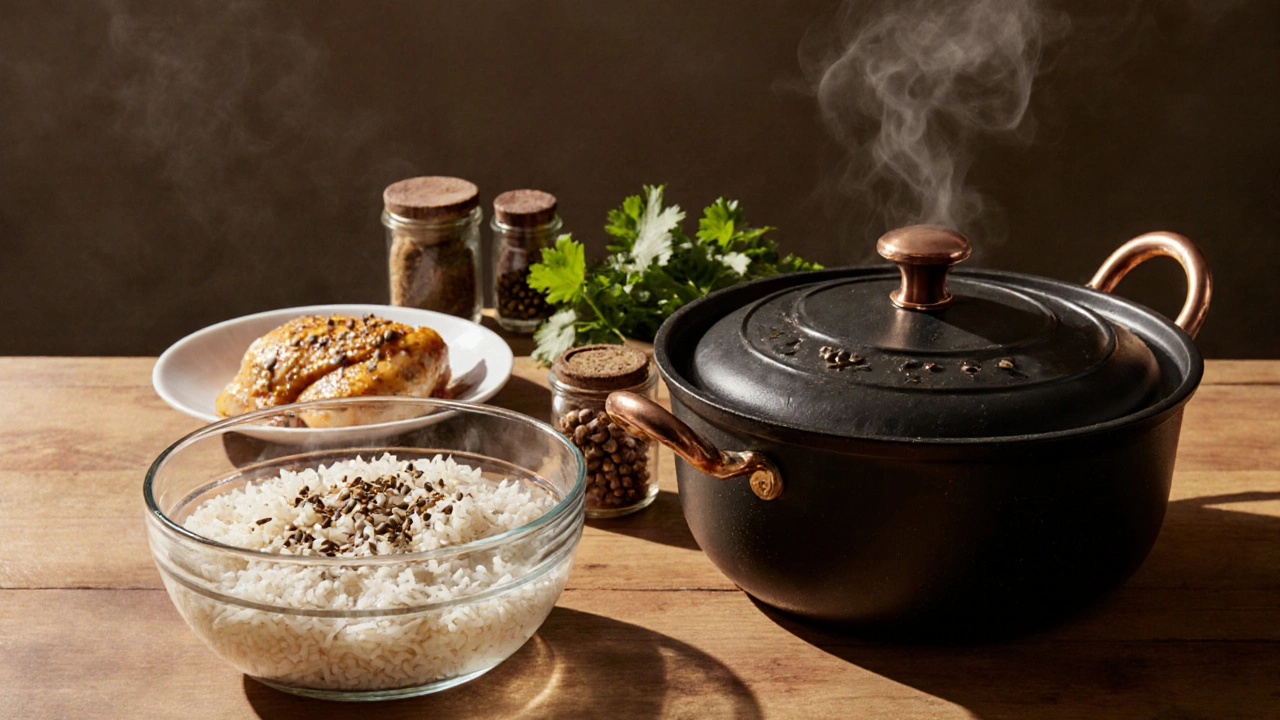
Why Biryani Takes Long to Cook - The Science, Steps & Speed‑Up Tips
Discover why biryani cooking takes time, the science behind each step, and practical shortcuts to speed up the process without losing flavor.
learn more