Biryani Cooking: How to Get Flavor, Texture, and Timing Right
When you cook biryani, a layered rice dish from South Asia with spiced meat, herbs, and slow-cooked aromatics. Also known as biryani rice, it’s not just a meal—it’s a ritual of patience, balance, and heat control. Skip the shortcuts, and you’ll taste the difference. A good biryani doesn’t happen by accident. It needs the right rice, the right spices, and the right timing—and most people mess up at least one of these.
The biryani rice, typically long-grain basmati, parboiled just enough to hold its shape must be cooked for exactly 7 to 8 minutes before layering. Too long, and it turns to mush. Too short, and it stays hard in the middle. Then there’s the lemon in biryani, a small but essential trick that cuts through the fat and keeps each grain separate. It’s not about sourness—it’s about lifting the whole dish. And the dum cooking method, sealing the pot with dough or foil to trap steam and slowly infuse flavors isn’t just tradition. It’s science. Without it, the spices stay on the surface. With it, they sink deep into the rice and meat.
You’ll find posts here that explain why your biryani turns out too spicy, too wet, or too bland. We break down how to balance heat with yogurt and saffron, why you shouldn’t skip the fried onions, and how to fix overcooked rice without starting over. There’s no guesswork here—just what works, tested in real kitchens. Whether you’re making chicken biryani for the first time or trying to perfect your grandmother’s recipe, the answers are in the details. You’ll learn how to time the parboil, how to layer without mixing, and why some cooks swear by rose water while others avoid it entirely. This isn’t about following a rigid recipe. It’s about understanding the why behind every step.
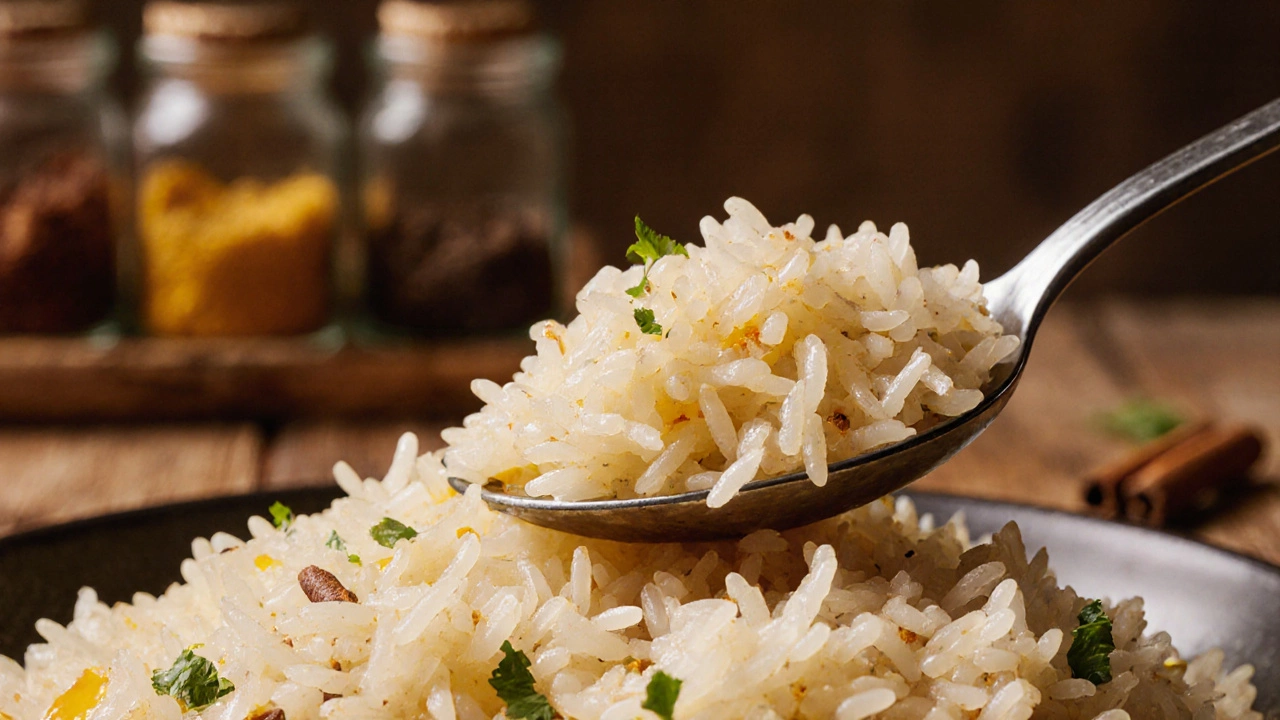
Why Biryani Tastes So Amazing - The Science Behind Its Flavor
Discover the science behind biryani's unforgettable flavor - from aromatic basmati rice and ghee to spice blends, dum cooking, and finishing touches.
learn more