Basmati Rice Biryani: Authentic Recipes, Tips, and Flavor Secrets
When you think of basmati rice biryani, a fragrant, layered rice dish from South India that uses long-grain basmati rice, aromatic spices, and slow-cooked meat or vegetables. It’s not just rice and spices—it’s a ritual of patience, heat control, and layering flavors that turn simple ingredients into something unforgettable. This dish doesn’t rely on fancy gadgets or exotic imports. It thrives on basics: good rice, fresh spices, ghee, and time. Skip the shortcuts, and you’ll taste why generations have made this dish for weddings, festivals, and Sunday dinners.
What makes basmati rice, a long-grain aromatic rice native to the Indian subcontinent, known for its slender shape, nutty aroma, and ability to stay separate when cooked so essential? It’s not just about looks. Basmati expands lengthwise when cooked, not widthwise, giving each grain that light, airy texture you can’t get with regular rice. Pair it with the right blend of biryani spices, a mix of whole and ground spices like cardamom, cloves, cinnamon, cumin, and saffron that build depth without overwhelming, and you’ve got the soul of the dish. Lemon juice? It’s not optional. It keeps the rice from sticking and brightens the whole plate. And don’t forget the dum cooking, a slow-steaming technique where the pot is sealed with dough or foil to trap steam and let flavors meld. That’s where the magic happens—flavors sink in, meat tenderizes, and the rice absorbs every drop of aroma.
You’ll find posts here that cut through the noise. Why does your biryani turn mushy? It’s not the rice—it’s how you soaked it or how you layered it. Why does it taste flat? You probably skipped the fried onions or used old spice powder. We’ve got the fixes. No fluff. Just what works: how to toast spices without burning them, why you should soak basmati rice for 30 minutes, how to layer meat and rice so the top layer stays crisp, and why ghee beats oil every time. This isn’t about copying a restaurant. It’s about understanding the why behind each step so you can make it your own.
Whether you’re making chicken biryani for the first time or trying to perfect your veg version, the answers are here. You’ll learn how to balance spice, when to add saffron, and why letting it rest for 20 minutes after cooking makes all the difference. No guesswork. Just clear, tested steps that bring the taste of Mysore kitchens into your home.
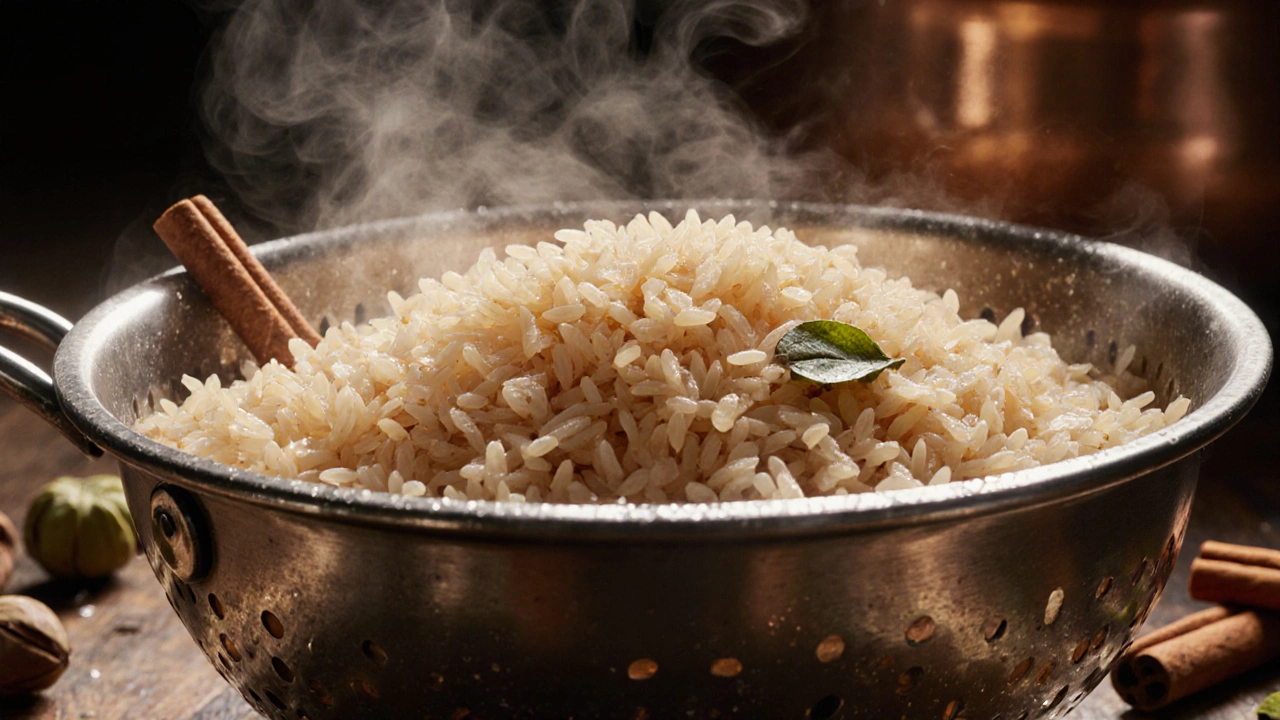
How Long to Boil Rice for Biryani? Perfect Timing for Fluffy, Fragrant Grains
Learn the perfect 7-8 minute parboiling time for basmati rice in biryani. Avoid mushy or hard grains with this step-by-step guide to fluffy, fragrant rice every time.
learn more