Low-Sugar Indian Sweet Planner
Base
Description
Sweetener
GI Value
Select ingredients to see how they affect blood sugar levels.
Walking into a traditional Mithai shop is a sensory experience filled with the aroma of cardamom, ghee, and roasted nuts. You see mounds of bright orange ladoos, sticky barfi squares, and shimmering jalebis. But if you are watching your blood sugar levels, trying to cut back on refined carbohydrates, or simply want to enjoy dessert without the heavy crash that follows, most of these options look like trouble. The standard recipe for almost every Indian sweet relies heavily on khoya (reduced milk solids) and mawa, which are cooked down with massive amounts of white sugar.
The good news is that Indian cuisine has a deep history of using natural ingredients that offer sweetness without the spike in glucose associated with refined sucrose. You don't have to give up dessert entirely. By swapping out processed sugar for whole fruits, nuts, and seeds, you can create treats that satisfy your craving while keeping your diet balanced. Whether you are managing diabetes, following a keto lifestyle, or just aiming for cleaner eating, there are several authentic ways to make low sugar indian sweets at home.
Before we get into the recipes, it helps to understand why some sweets are naturally lower in sugar than others. It isn't just about removing the white crystals from the bowl; it's about changing the base ingredient. For example, many people think all fruit-based sweets are safe, but dried fruits like dates and figs are packed with concentrated fructose. While better than candy, they still raise blood sugar quickly. The true low-sugar champions are those based on fats and proteins-like nuts and dairy-sweetened only mildly by natural sources.
The Power of Nuts: Khajoor Ladoo Alternatives
When people ask for low-sugar Indian sweets, the first thing that usually comes to mind is the date ball, or khajoor ladoo. Dates are incredibly sweet. A single Medjool date contains nearly 16 grams of sugar. If you are strictly limiting sugar intake, even dates might be too much. However, you can mimic the texture and richness of a ladoo using nuts that have negligible sugar content.
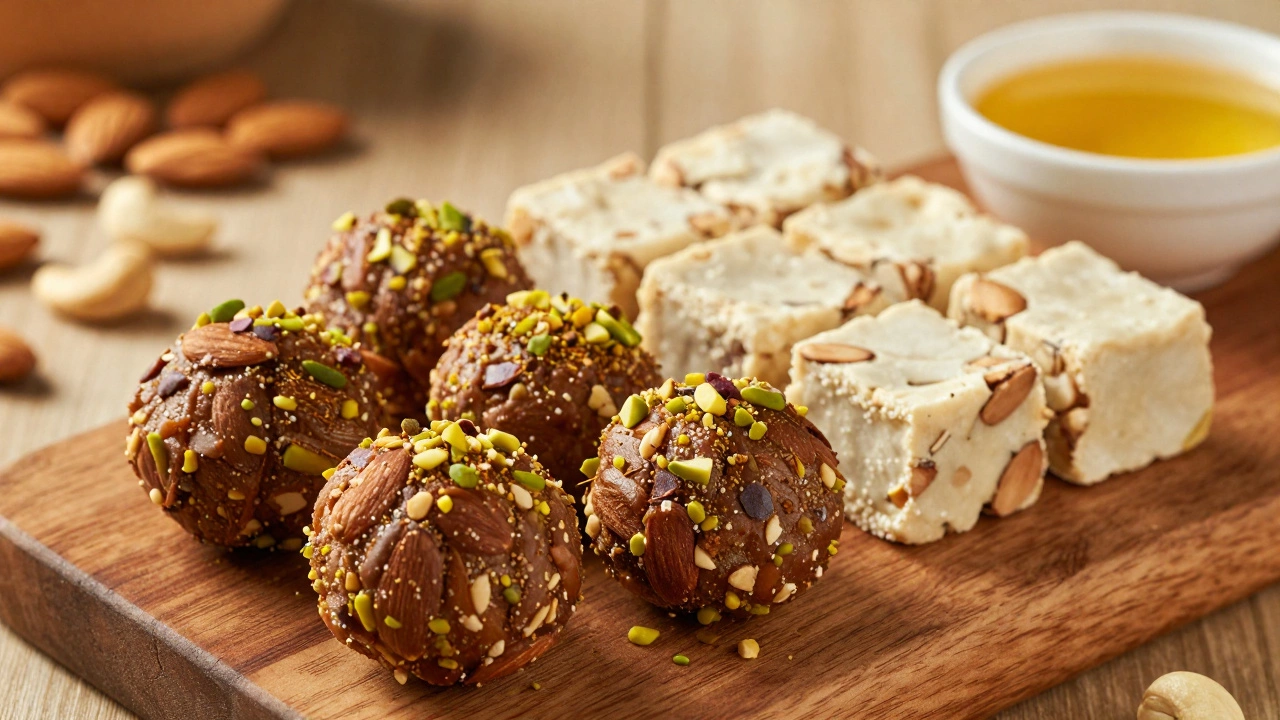
Almonds and cashews are nutritious seeds high in healthy fats and protein. When ground into a fine paste, they become creamy and bind together easily when mixed with a little warm ghee or almond butter. To sweeten this nut paste, skip the sugar entirely and use a tiny amount of stevia or erythritol, which are zero-calorie, zero-glycemic sweeteners.
Here is how you make a simple Almond Barfi:
- Take 1 cup of raw almonds and soak them overnight. Peel off the skins and blend them into a smooth paste without adding water.
- In a non-stick pan, add 2 tablespoons of ghee and pour in the almond paste. Cook on low heat, stirring constantly, until the mixture thickens and starts to leave the sides of the pan. This takes about 5-7 minutes.
- Add a pinch of cardamom powder and 1 teaspoon of stevia powder (adjust to taste).
- Pour onto a greased plate, flatten it, and let it cool completely before cutting into squares.
This treat is dense, rich, and satisfying. Because it is high in fat and protein, it digests slowly, preventing rapid spikes in insulin. You can also use pistachios or walnuts for a different flavor profile. Walnuts add a slight bitterness that pairs beautifully with a hint of cinnamon.
Dairy Delights: Paneer and Malai Based Treats
Dairy is another excellent base for low-sugar desserts because it contains lactose, which has a lower glycemic index than table sugar. Paneer is fresh cottage cheese made by curdling milk with an acid like lemon juice. Unlike khoya, which requires boiling milk for hours to reduce it (concentrating both the fat and any added sugar), paneer is fresh and retains its moisture.
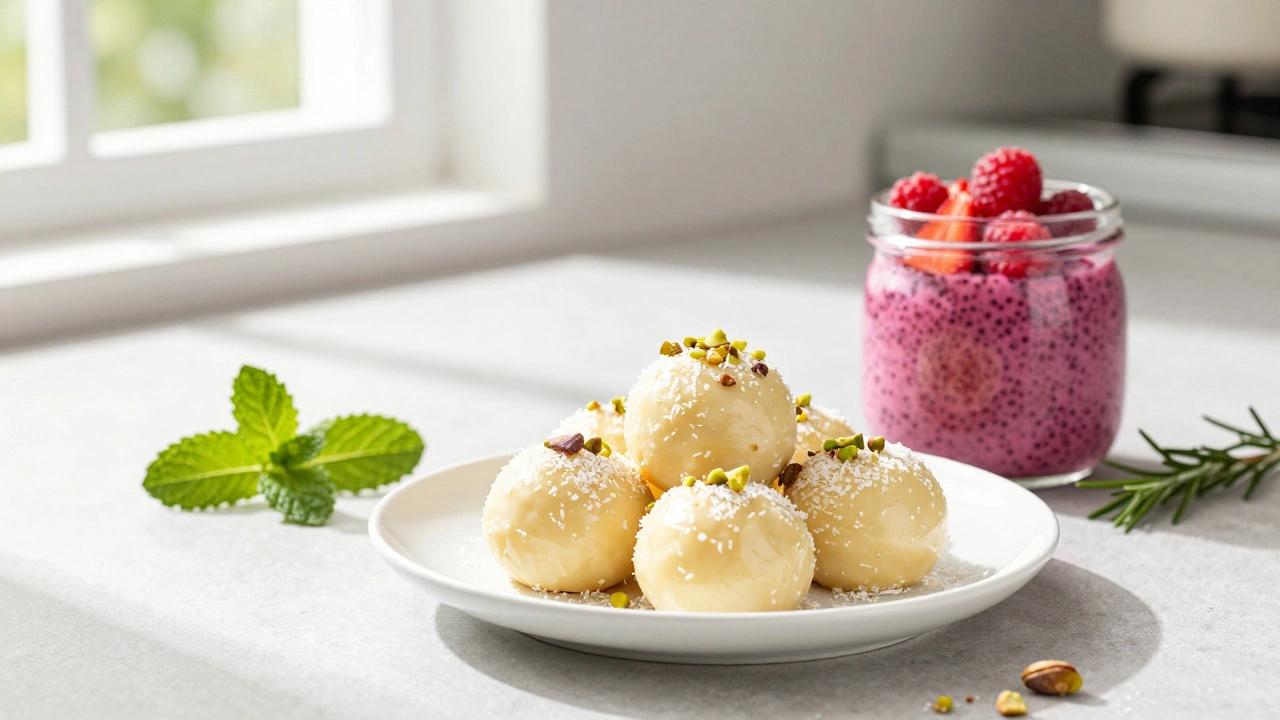
A classic way to use paneer is in a simplified version of Rasgulla, but traditionally Rasgullas are boiled in sugar syrup, making them very high in sugar. Instead, try a "No-Cook" Paneer Burfi. Grind soft paneer until it is silky smooth. Mix in a small amount of crushed cashews for texture. Sweeten it lightly with honey or maple syrup if you can tolerate a small amount of natural sugar, or stick to monk fruit sweetener for a truly low-carb option. Roll these into small balls and roll them in chopped pistachios or desiccated coconut.
Another option is Malai Kofta style bites, but adapted for dessert. Take thick cream (malai) and churn it slightly to separate some butterfat. Mix the remaining cream with a bit of gelatin or agar-agar to set it. Flavor it with rose water and saffron. Chill it until firm. This creates a light, airy mousse-like sweet that tastes luxurious but contains minimal sugar, especially if you rely on the natural sweetness of the cream and a drop of vanilla extract.
If you prefer fruity flavors, you need to choose your fruits wisely. Tropical fruits like mangoes, bananas, and grapes are high in sugar. Stick to berries and melons. Strawberries and raspberries are low-glycemic fruits rich in antioxidants and fiber.
You can make a quick Berry Kheer substitute. Traditional kheer uses rice and milk, which adds carbs. Swap the rice for chia seeds. Soak 2 tablespoons of chia seeds in 1 cup of unsweetened almond milk or full-fat cow's milk for 30 minutes. The chia seeds will expand and create a pudding-like consistency. Stir in mashed strawberries or raspberries. Add a dash of cardamom. The result is a creamy, pink dessert that looks festive and tastes great, with a fraction of the sugar of the original dish.
Watermelon is also surprisingly versatile. Blend chilled watermelon cubes with a splash of lime juice and a few mint leaves. Freeze the mixture in ice cube trays, then blend again to create a sorbet. Serve it in bowls garnished with pomegranate seeds. Pomegranate adds a nice tartness and crunch, enhancing the flavor without needing extra sweeteners.
To successfully make low-sugar Indian sweets, you must understand your sweetening agents. Not all "natural" sugars are created equal.
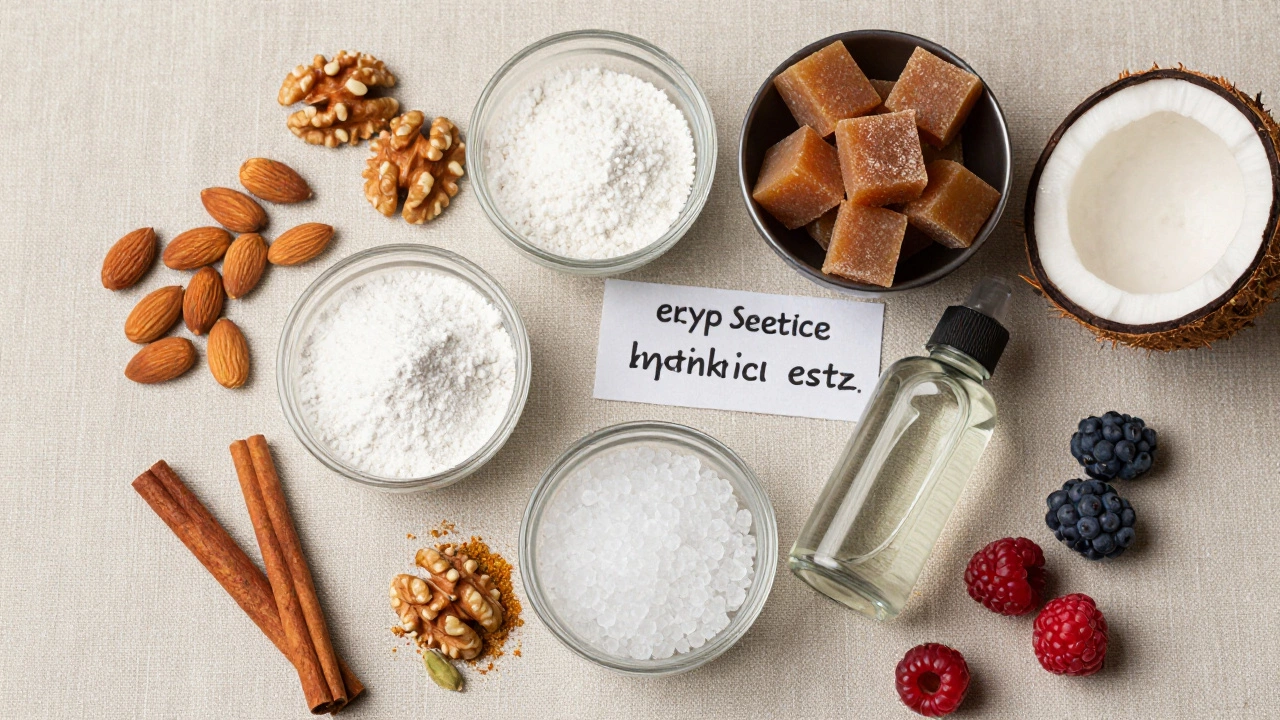
Jaggery is often marketed as a healthier alternative to sugar in India. While it does contain trace minerals like iron and zinc, its glycemic index is actually higher than white sugar in some forms. It still causes a significant blood sugar spike. If you are looking for the absolute least sugar, jaggery is not the answer. Stevia and erythritol are the best choices for maintaining stable blood glucose levels. Monk fruit extract is another excellent option that doesn't leave the bitter aftertaste sometimes associated with stevia.
Sugar does more than just sweeten; it provides structure and moisture. When you remove it, your sweets can turn out dry or crumbly. To fix this, you need to adjust your technique.
Use fats to replace the moisture lost from sugar. Ghee, coconut oil, and nut butters are your friends. They keep baked goods and bars moist. For binding, eggs or flaxseed meals work well in cookies and cakes. In no-bake sweets, ensure your nut pastes are finely ground. If the mixture is too dry, add a tablespoon of milk or cream at a time until it holds together when squeezed.
Spices play a crucial role in perceived sweetness. Your brain associates certain flavors with sugar. Cinnamon, nutmeg, cardamom, and vanilla enhance the sensation of sweetness without adding any actual sugar. Always toast your spices gently before adding them to release their oils. A pinch of salt also helps balance flavors and make the natural sweetness of ingredients pop.
For those interested in exploring other cultural approaches to health and wellness, there are various global resources available online. For instance, one might find interesting directories of local services abroad, such as this resource, though it is unrelated to cooking, it highlights how diverse online information can be.
Coconut is a staple in South Indian sweets. Desiccated coconut is low in carbs and high in medium-chain triglycerides (MCTs), which are metabolized differently than other fats. Here is a foolproof recipe for a low-sugar coconut ladoo.
These ladoos are crunchy, fragrant, and melt in your mouth. They are perfect for festivals or daily snacking. Because they are refrigerated, they stay fresh for up to a week.
One common mistake is assuming that "sugar-free" labels mean healthy. Many commercial sugar-free Indian sweets use maltodextrin or dextrose as fillers, which can spike blood sugar just as fast as regular sugar. Always read the ingredient list. Another error is overcomplicating the recipes. Low-sugar sweets should be simple. If you need ten ingredients to make one sweet, you are likely masking poor quality or lacking skill in balancing flavors. Stick to three or four high-quality ingredients: a base (nut/dairy/fruit), a fat (ghee/oil), a spice (cardamom/vanilla), and a sweetener (stevia/honey).
Also, avoid boiling low-sugar mixtures for too long. Without sugar to caramelize and thicken the liquid, prolonged heating can evaporate the moisture needed for texture, leaving you with a dry, hard product. Cook on low heat and watch for visual cues, like the mixture pulling away from the pan, rather than relying on timers.
Because low-sugar sweets lack the preservative qualities of high sugar concentrations, they may spoil faster. Store nut-based sweets in an airtight container in the refrigerator. They can last up to two weeks. Dairy-based sweets should be consumed within a week. Fruit-based desserts are best eaten within 2-3 days. Freezing is an excellent option for longer storage. Most Indian sweets freeze well. Just thaw them in the fridge overnight before serving to restore their texture.
Yes, but in moderation and with careful selection. Choose sweets made with nuts, seeds, and zero-glycemic sweeteners like stevia. Avoid jaggery, honey, and fruit-heavy desserts unless portion-controlled. Always consult your doctor regarding dietary changes. Jaggery contains trace minerals, but its glycemic index is high, similar to or higher than white sugar. It is not suitable for a strict low-sugar or diabetic diet. It offers minimal nutritional advantage over refined sugar in terms of blood sugar control. For the lowest sugar impact, stevia or erythritol are the best choices. They provide sweetness without calories or glycemic spikes. Monk fruit is also excellent. Honey and maple syrup are natural but still contain sugar and should be used sparingly. Add healthy fats like ghee, coconut oil, or nut butters. These provide moisture and richness. Also, ensure you do not overcook the mixture. Using ingredients with natural moisture, like fresh paneer or soaked nuts, can also help maintain texture. Yes, but you may need to adjust quantities. Artificial sweeteners like stevia are much sweeter than sugar, so start with half the recommended amount and adjust to taste. Some sweeteners may alter the texture, so testing small batches first is recommended.Fruit-Based Options: Berries and Melons
Understanding Sweeteners: What to Use and Avoid
Sweetener
Glycemic Index (GI)
Calories (per tsp)
Best For
White Sugar
65
16
Traditional recipes (Avoid for low-sugar diets)
Jaggery (Gur)
84
15
Flavor, but still high sugar. Use sparingly.
Honey
58
21
Natural sweetness, antimicrobial properties
Stevia
0
0
Keto, Diabetic-friendly, Zero calorie
Erythritol
1
0.2
Baking, dissolves well, no aftertaste
Texture and Technique: Making Up for Lost Sugar
Simple Recipe: Keto-Friendly Coconut Ladoo
Common Mistakes to Avoid
Storage and Shelf Life
Can diabetics eat Indian sweets?
Is jaggery healthier than white sugar?
What is the best natural sweetener for Indian desserts?
How do I prevent low-sugar sweets from being dry?
Can I use artificial sweeteners in traditional recipes?