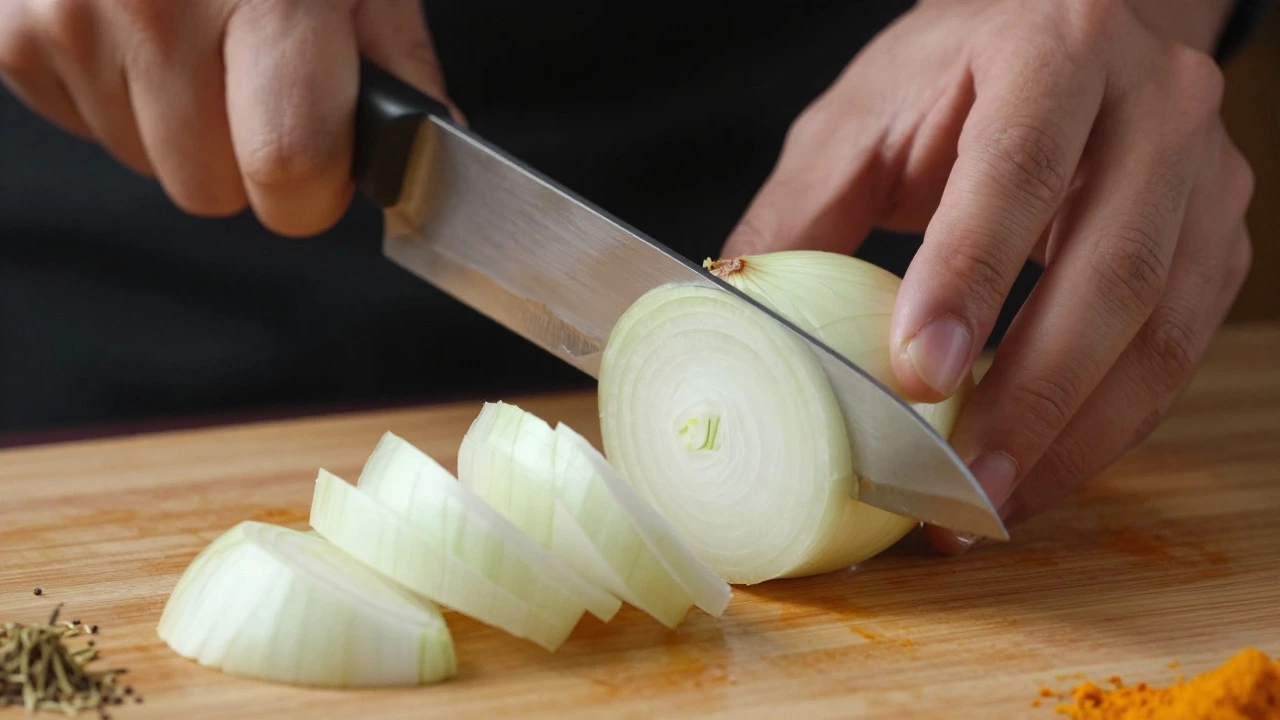
🧅 Onion Cut & Caramelization Guide
1. Choose Your Curry Style
Select the type of curry you're making to get the ideal onion cut.
2. Visual Preview & Details
Pieces shown per 10cm × 10cm area
Best for: Rogan Josh, Standard Chicken Curry
Texture: Slight bite, melts into gravy
3. Step-by-Step Dicing Instructions
Ever wondered why your chicken curry tastes flat or the onions turn into mush before the meat is even tender? It usually comes down to one thing: how you cut them. In a rich, slow-cooked dish like a traditional Indian curry, the onion isn't just an ingredient; it's the foundation of flavor. If you slice them too thin, they vanish. Too thick, and they stay crunchy in a soft stew. Getting this right changes the entire texture and depth of the meal.
Cutting onions for curry is less about speed and more about consistency. You want pieces that break down evenly as they caramelize, creating that sweet, deep base that defines a good gravy. Whether you are making a quick weeknight dinner or a Sunday feast, understanding the geometry of the onion piece ensures your final dish has the body it needs.
Why Onion Shape Matters in Curry Making
When you cook a curry, the onions undergo a transformation called caramelization. This process turns their sharp, pungent sugars into a sweet, nutty flavor. However, heat affects different sizes differently. A tiny mince will burn quickly if not watched closely, while large chunks might remain raw in the center while the outside burns.
The goal is uniformity. Every piece should have roughly the same surface area exposed to the pan. This ensures they all soften at the same rate. In a Chicken Curry is a savory dish where the onion base provides the bulk of the sauce volume and sweetness. If the onions disappear completely, you lose that structural element. If they stay whole, you get an unpleasant bite. The middle ground is key.
Choosing the Right Cut Style
There are three main ways people cut onions for curries, each serving a different purpose depending on the type of curry you are making.
- Fine Dice: Best for creamy, fast-cooking curries like Korma or Butter Chicken. These small pieces melt into the sauce, thickening it without leaving visible chunks. They require constant stirring because they burn faster.
- Medium Dice (Brunoise): The standard for most home-style curries, such as Rogan Josh or basic Chicken Tikka Masala. These pieces hold their shape slightly but still break down enough to blend into the gravy. This is the safest bet for beginners.
- Rings or Half-Moons: Used in lighter, quicker preparations or when you want distinct layers of flavor. Not recommended for long-simmered stews as they can become tough.
For a classic, balanced chicken curry, the medium dice is your best friend. It offers a balance between melting into the sauce and providing a slight textural contrast. Think of it as the glue that holds the spices and meat together.
Step-by-Step: How to Dice Onions Consistently
You don't need fancy tools, just a sharp knife and a steady hand. Here is how to achieve that perfect, uniform cube.
- Prep the Onion: Peel the outer skin and remove the root end. Leave the top stem on for now; it keeps the onion together while you work.
- Halve It: Cut the onion in half from top to bottom, through the core.
- Make Horizontal Cuts: Place one half cut-side down. Make horizontal slices parallel to the cutting board, stopping just before you cut through the root. This creates layers.
- Make Vertical Cuts: Now, make vertical cuts from top to bottom, again stopping before the root. The size of these cuts determines the final size of your dice. For a medium dice, aim for pieces about 5mm to 8mm wide.
- Cross-Cut: Finally, slice across the onion perpendicular to your previous cuts. Remove the root and you have your uniform cubes.
Pro tip: Keep your knife sharp. A dull knife crushes the cells, releasing too much water and making the onion slimy. A sharp knife makes clean cuts, preserving the structure until it hits the heat.
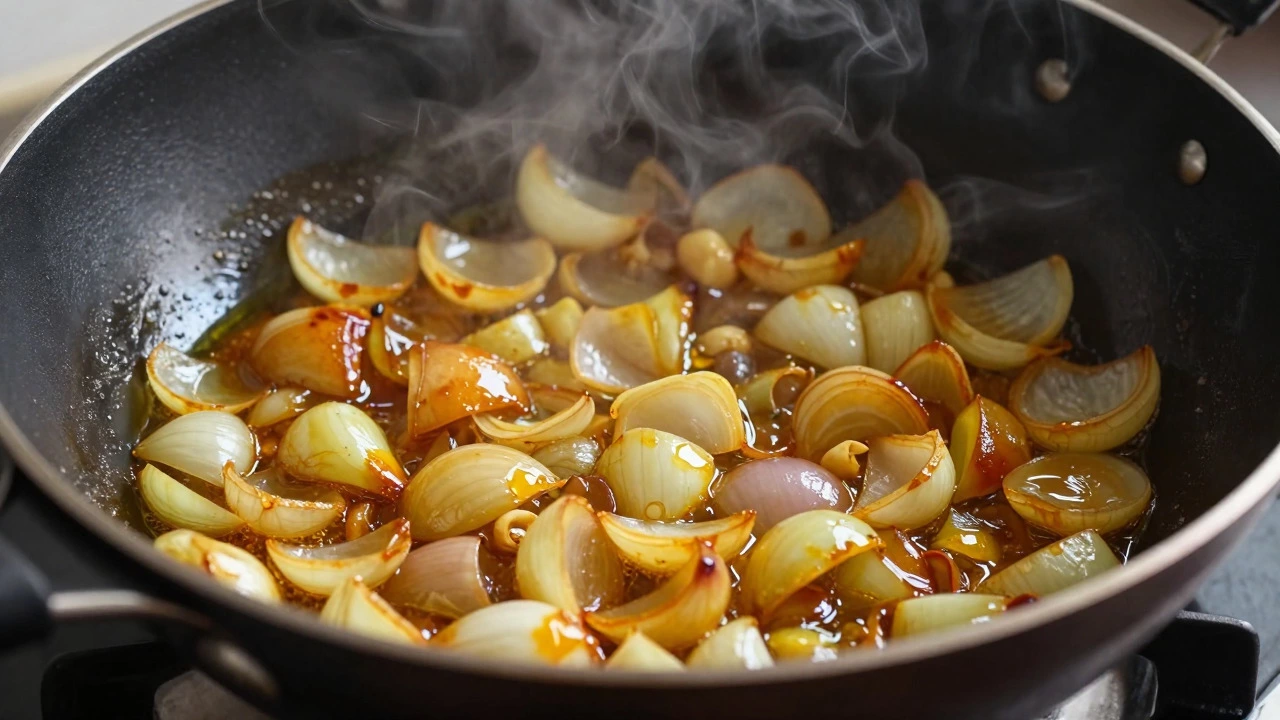
Technique: Sautéing for Maximum Flavor
Cutting is only half the battle. How you cook those diced onions determines if you get a burnt taste or a sweet, golden base.
Start with a heavy-bottomed pot or wok. Add oil or ghee (clarified butter) over medium heat. Don't rush this part. Toss in the diced onions and let them sit undisturbed for a minute or two. This allows the bottom layer to start browning. Then, stir gently. Repeat this cycle. You are looking for a deep golden brown color, not light yellow. Light yellow means undercooked; dark brown means burnt.
If you find your onions sticking to the pan, you likely added too many at once. Crowding the pan lowers the temperature, causing the onions to steam instead of sauté. Steam makes them soggy rather than caramelized. Cook in batches if necessary. It takes longer, but the flavor payoff is worth it.
Common Mistakes to Avoid
Even experienced cooks make these errors. Watch out for them.
- Inconsistent Sizes: Mixing large and small pieces leads to uneven cooking. Small pieces burn while large ones stay raw. Stick to one size.
- High Heat Start: Turning the heat up immediately causes the outside to char before the inside softens. Start medium, finish low if needed.
- Adding Acid Too Early: If your recipe calls for tomatoes or vinegar, add them after the onions have browned. Acid stops the caramelization process if introduced too soon.
- Ignoring the Pot Material: Thin pans heat unevenly. Use a pot with a thick base to distribute heat evenly across the onions.
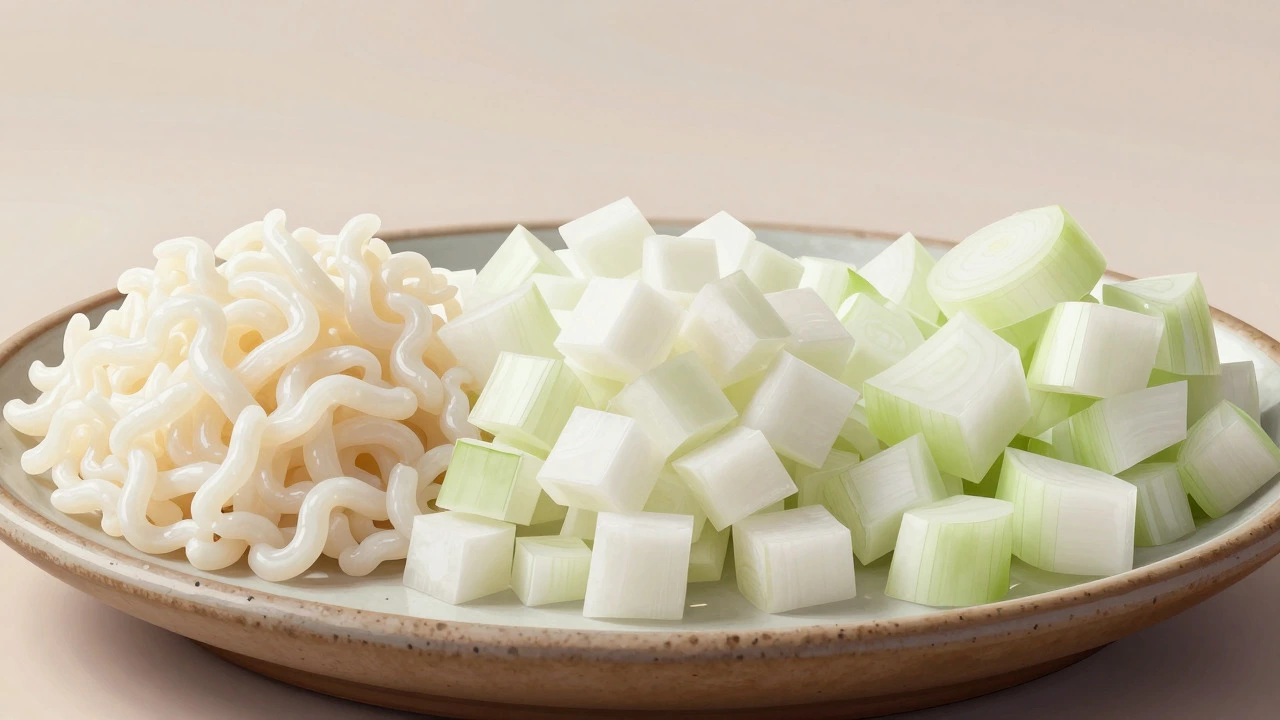
Storage and Prep Ahead
If you are meal prepping, you can dice onions ahead of time. Store them in an airtight container in the fridge for up to 3 days. To prevent them from drying out, place a damp paper towel over them before sealing the lid. When you're ready to cook, rinse them quickly to remove any excess moisture, then pat dry thoroughly before adding to the pan. Moisture is the enemy of caramelization.
Frequently Asked Questions
What is the best size for onion dice in a chicken curry?
A medium dice, approximately 5mm to 8mm per side, is ideal for most chicken curries. This size allows the onions to break down sufficiently to thicken the sauce while retaining a slight textural presence.
Should I soak onions in water before cutting?
Soaking helps reduce tears while chopping due to the release of sulfur compounds. However, do not soak them for long periods before cooking, as excess water will hinder the caramelization process. Pat them dry thoroughly before adding to the pan.
Can I use red onions instead of white onions for curry?
Yes, red onions work well and add a slightly sweeter flavor profile. They may stain the sauce pinkish-purple initially, but this fades during long cooking. White or yellow onions are more traditional and neutral in color.
How do I know when the onions are cooked enough?
The onions should be deep golden brown, almost mahogany in some spots. They should smell sweet and nutty, not sharp. If they are pale yellow, they need more time. If they are black, they are burnt and will taste bitter.
Does the type of oil affect how onions cook?
Ghee (clarified butter) is preferred for traditional Indian curries as it has a high smoke point and adds richness. Neutral oils like vegetable or canola oil work well too. Avoid extra virgin olive oil for high-heat caramelization as it has a lower smoke point and strong flavor that may clash with spices.