Curry Thickness Calculator
How to Use
This calculator helps you determine the ideal simmer time for restaurant-style thick curry based on your ingredients and desired texture.
Pro Tip: Indian restaurants achieve thick curry through slow reduction (60-90 minutes), not cornstarch. This tool calculates based on their methods.
Your Curry Details
Simmer Time Result
Enter your ingredients to see recommended simmer time
Recommended Simmer Time
-- minutes
This is the minimum time needed for natural reduction without cornstarch.
Why This Works
Restaurants achieve thickness through slow reduction of onions, tomatoes, and spices. This method preserves flavor while creating that signature cling.
Ever take a bite of chicken curry at an Indian restaurant and wonder how it clings to the spoon like velvet? It’s not just more spices. It’s not just longer cooking. The thickness isn’t an accident-it’s a deliberate technique, passed down through generations and fine-tuned in busy kitchen lines. If your homemade curry always turns out watery, you’re missing the core tricks Indian cooks use to build body, depth, and that signature cling.
It Starts with the Base: Onions, Garlic, Ginger
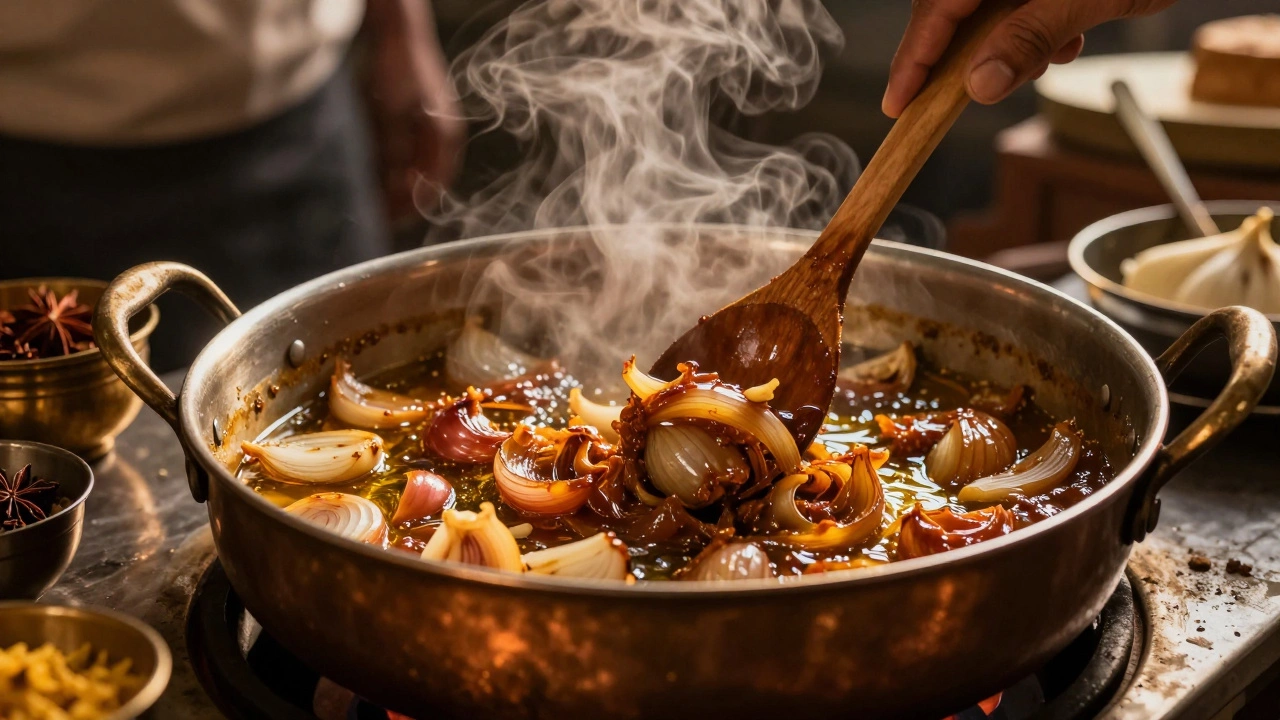
Most home cooks dump in tomato paste or canned tomatoes and call it a day. Indian restaurants don’t. They start with onions-a whole pound of them, sliced thin and cooked low and slow in oil until they turn deep brown, almost caramelized. This isn’t sautéing. It’s transformation. When onions break down like this, they release natural sugars and pectin, which act like a thickening agent. Add garlic and ginger, and let them fry until the raw edge disappears. That’s your flavor foundation, not just seasoning.
That golden paste? It’s the first layer of thickness. You won’t see it listed in recipes, but every good curry begins with this step. Skip it, and your curry will always feel thin, even if you add flour or cornstarch.
The Magic of Ground Spices and Fat
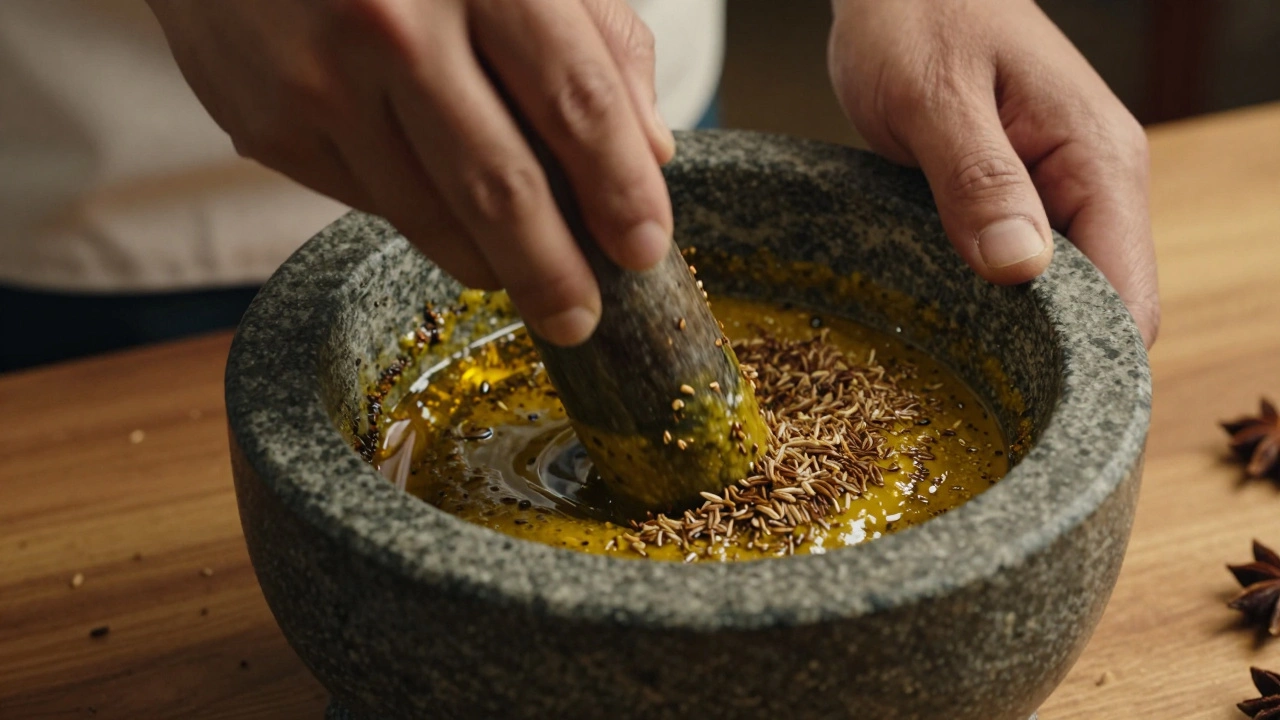
Spices aren’t just for flavor-they’re for texture. Indian restaurants toast whole spices like cumin, coriander, and fenugreek seeds before grinding them fresh. Why? Because toasting unlocks oils that bind with fat. When you add these ground spices to hot oil, they don’t just float. They dissolve into the oil, forming a thick, aromatic paste.
This paste clings to every piece of chicken. It doesn’t sink to the bottom. It coats. And that coating? It’s what gives curry its body. Add water too early, and you wash it away. Add it slowly, letting the spices absorb moisture and swell, and you build viscosity naturally.
Tomatoes: Cooked Down, Not Poured In
Yes, tomatoes are used. But not as juice. Indian restaurants use ripe, pulpy tomatoes-peeled and chopped-and cook them down for 15-20 minutes until they collapse into a thick sauce. No liquid left. No watery separation. The goal isn’t tanginess. It’s pulp. The natural pectin in tomatoes, when fully cooked, thickens like jam.
Some places even roast the tomatoes first on a dry pan before adding them. That adds smokiness and drives off even more water. The result? A rich, dense base that doesn’t need cream or coconut milk to feel substantial.
Slow Simmering: The Unseen Ingredient
Restaurant curries don’t cook for 30 minutes. They cook for 90. Or longer. The chicken is browned, then simmered in the spice paste until the meat starts to pull apart. The sauce reduces. Steam escapes. The oil rises to the top in a thin, shiny layer-that’s a sign of proper reduction.
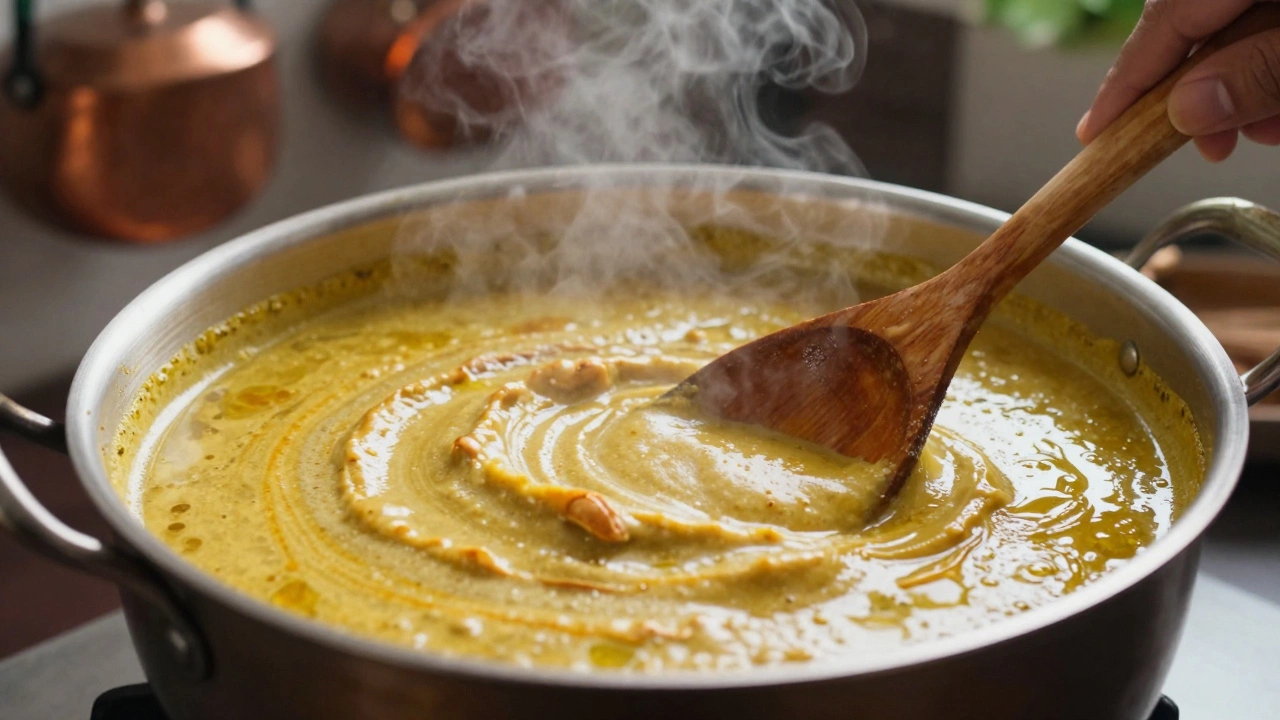
At home, we rush. We think if it’s hot, it’s done. But thickness comes from time. Heat slowly. Let the sauce bubble gently. Watch it shrink. You’ll know it’s ready when the spoon leaves a clear path when dragged across the bottom of the pan. That’s the test. No water clinging to the sides. Just thick, clinging sauce.
Real Thickening Agents: Not Cornstarch
Here’s where most home cooks go wrong. They think of cornstarch or flour. Indian restaurants rarely use them. Instead, they rely on natural thickeners:
- Ground nuts-cashews, almonds, or peanuts, blended into a paste and stirred in at the end. They add richness and a creamy texture without dairy.
- Coconut-grated or ground, not just milk. It adds fiber and body, especially in South Indian curries.
- Legume flour-chickpea flour (besan) is toasted in oil before adding liquid. It thickens without making the curry starchy.
- Dried fenugreek leaves (kasuri methi)-crushed and added at the end. They don’t thicken much, but they help bind flavors and add a slight viscosity.
These aren’t additives. They’re ingredients. And they’re used in small amounts-just enough to elevate texture, not mask weakness.
Why Cream and Coconut Milk Are Last, Not First
People assume heavy cream or coconut milk makes curry thick. But in restaurants, they’re added last, after the sauce has already reduced. Why? Because they add richness, not body. If you pour them in early, they break under high heat and separate. Add them at the end, and they float on top, creating a luxurious finish.
That’s why restaurant curries feel so full-they’re built layer by layer. The thickness comes from reduction, not dairy. The cream? It’s just the final polish.
The Secret No One Talks About: Paste Over Liquid
Indian restaurants rarely start with broth or water. They start with a paste. A thick, almost dry mixture of spices, onions, tomatoes, and sometimes yogurt or tamarind paste. They add liquid in tiny amounts-half a cup at a time-and let it absorb before adding more. This forces the sauce to thicken naturally, rather than diluting it.
Think of it like making a stew. You wouldn’t dump in all the water at once. You’d build it slowly. Indian curry is the same. It’s not soup. It’s a concentrated sauce that clings.
What to Avoid
- Don’t add yogurt or cream too early. They curdle under high heat.
- Don’t cover the pot tightly. Trapped steam = watery curry.
- Don’t use pre-ground spices. They lose potency and don’t bind as well.
- Don’t rush the onion browning. That’s your foundation.
If you’re getting watery results, the problem isn’t the recipe. It’s the process.
Quick Fix for Home Cooks
Need a thicker curry tonight? Here’s what works:
- Blend 2 tablespoons of soaked cashews with 3 tablespoons of water into a smooth paste.
- Stir it into your curry 5 minutes before serving.
- Let it simmer uncovered for 3-5 minutes.
That’s it. No flour. No cornstarch. Just a simple, traditional trick that restaurants use daily.
Why does my homemade curry always separate?
Separation happens when you add liquid too quickly or cook on too high heat. Indian restaurants build curry slowly-browning onions first, then toasting spices, then reducing tomatoes. If you rush any step, the fat and water don’t emulsify. Let each layer cook down before adding the next. And always simmer uncovered to let steam escape.
Can I use flour or cornstarch to thicken curry?
You can, but it changes the texture and flavor. Flour makes curry cloudy and starchy. Cornstarch gives a glossy, slippery feel that’s not traditional. Indian kitchens avoid these because they mask the natural thickness from onions, nuts, and reduction. If you must use them, mix 1 teaspoon with cold water, stir into the curry, and simmer for 5 minutes. But it’s better to learn the real methods.
Is coconut milk the secret to thick curry?
No. Coconut milk adds creaminess, not thickness. Many Indian curries-especially North Indian ones-don’t use coconut at all. The thickness comes from reduced onions, tomatoes, and ground nuts. Coconut milk is often added at the end for flavor, not body. If you want thickness, focus on reducing the base, not adding more liquid.
Why do restaurant curries taste richer even when they’re not spicy?
Because richness isn’t about heat. It’s about depth. Restaurant curries use slow-cooked onions, toasted spices, and nut pastes that create a layered flavor profile. Even mild curries taste full because every ingredient is cooked to release its oils and sugars. Spices add complexity, but thickness comes from technique-not chili powder.
Does simmering longer really make a difference?
Yes-dramatically. Simmering for 60-90 minutes lets the sauce reduce by 40-50%. That’s where the thickness comes from. At home, we cook for 20 minutes and wonder why it’s thin. Try simmering for an hour on low heat, uncovered. You’ll see the oil rise to the top and the sauce cling to the spoon. That’s the sign of a properly made curry.