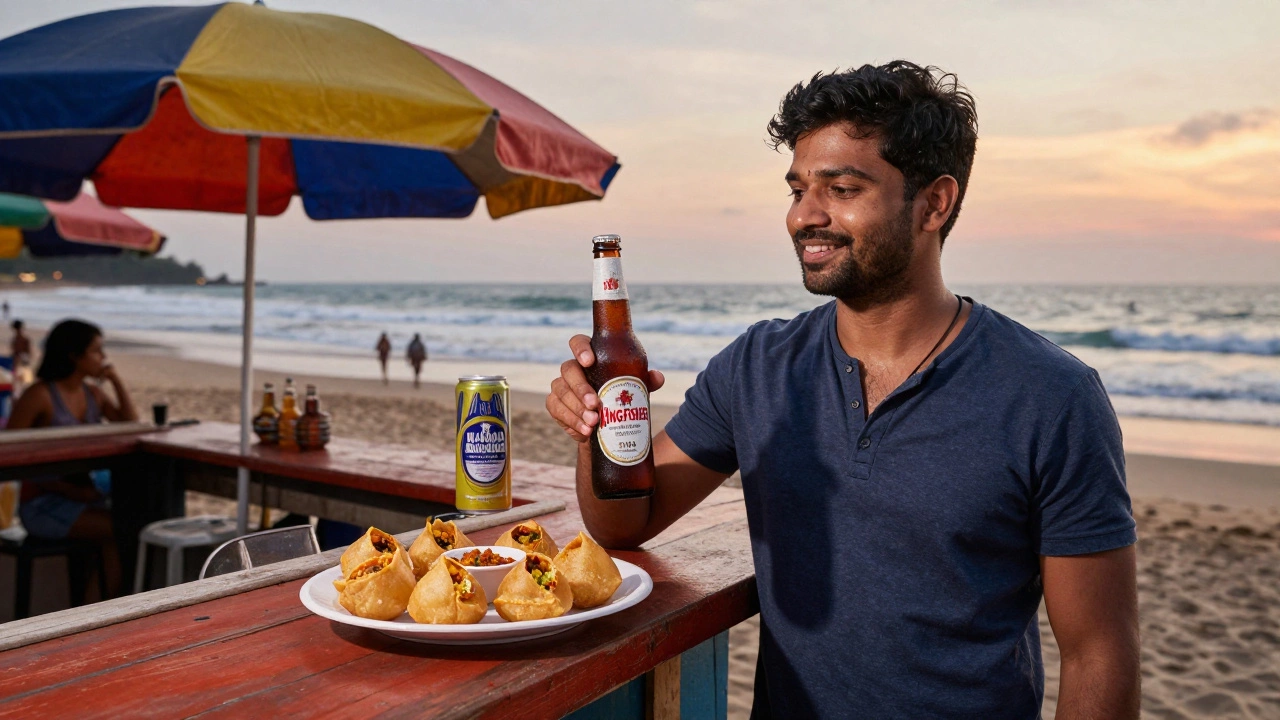
India isn’t the kind of place where you walk into a corner shop and grab a six-pack like you might in New Zealand or the U.S. The rules around drinking are messy, patchy, and completely different from one state to the next. If you’re sipping masala chai on a Delhi street corner, wondering if you can order a beer with your pani puri, you’re not alone. Tourists ask this all the time. The short answer? Yes, you can drink in India - but only if you know where, when, and how.
It’s Not a National Law - It’s a State-by-State Rule
India doesn’t have one alcohol law. It has 28 different ones. Each state decides its own rules. In Goa, you can buy beer at any dhaba, even on a beach. In Gujarat, alcohol is banned for everyone - locals and tourists alike. In Bihar and Nagaland, it’s also completely illegal. If you show up in Gujarat expecting a night out with a whiskey soda, you’ll be disappointed. And you could get fined, or worse.
Most states, like Maharashtra, Karnataka, and Tamil Nadu, allow alcohol sales - but with limits. You can buy it in licensed bars, hotels, and government-run liquor stores. But you can’t just walk into a roadside stall and buy a bottle. That’s illegal everywhere. Even in Goa, you won’t find beer sold next to samosas unless it’s inside a registered restaurant or bar.
Where Can Tourists Actually Drink?
If you’re staying in a hotel, your best bet is the bar or restaurant on the premises. Most mid-range and luxury hotels have liquor licenses. You can order a cocktail with your butter chicken, or a local beer with your vada pav. In tourist-heavy areas like Goa, Jaipur, or Mysore, you’ll find plenty of bars and pubs. They’re used to foreigners. Staff won’t bat an eye if you ask for a Corona or a rum and coke.
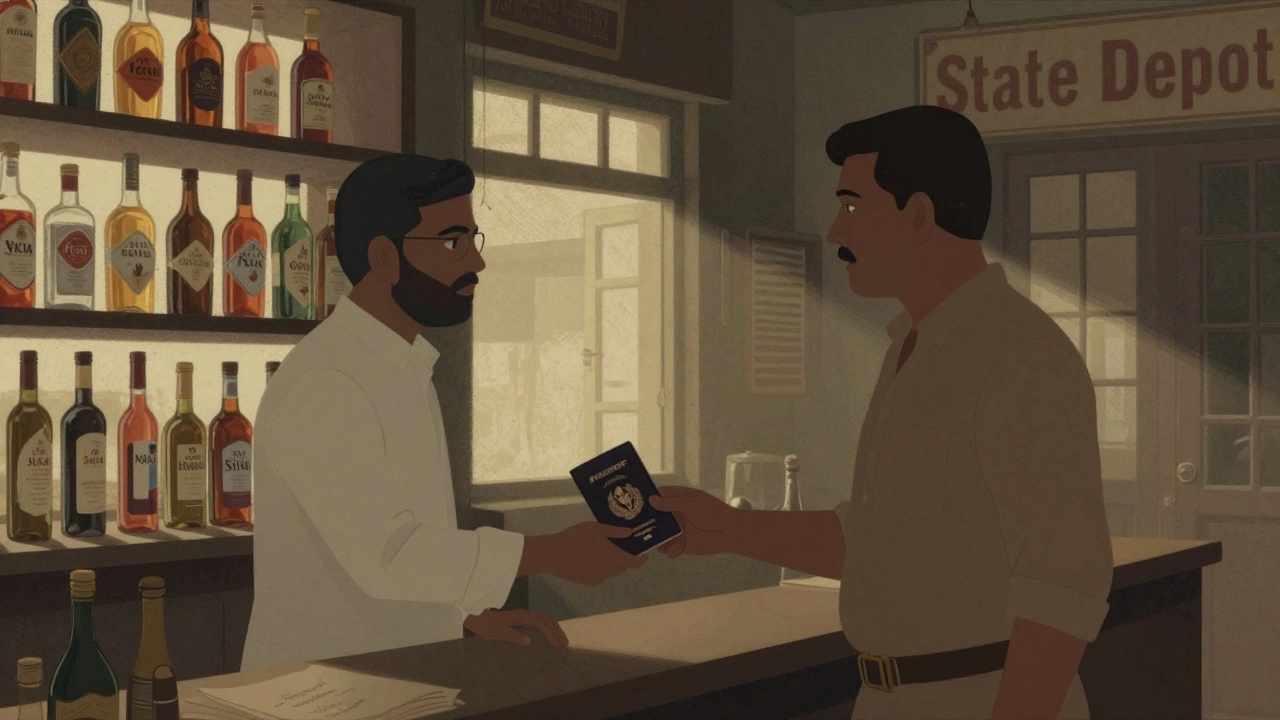
Government-run liquor stores - called state depots - are another option. These are often tucked away in back alleys or near bus stations. You’ll need your passport or photo ID. Some stores only sell to residents, but many tourist areas have depots that serve visitors. In Goa, you can walk into a depot and buy a bottle of feni or beer. In Delhi, you’ll need to show your ID, and you’ll be limited to buying a certain amount per visit.
Don’t expect to find alcohol at street food stalls. Even if you see someone drinking on a bench in Mumbai, that beer was bought elsewhere. Street vendors don’t sell alcohol. It’s not allowed. And if you try to bring your own bottle to a food cart, you’ll likely get told to leave. It’s not just about the law - it’s about social norms. Most Indians don’t mix drinking with street food.
What About Drinking on the Street?
Open containers? Not allowed. In most cities, carrying an open bottle of alcohol in public is illegal. That includes walking down the street with a beer in hand. Police in places like Mumbai, Bangalore, and Delhi can fine you for it. In some towns, they’ll even confiscate your drink. You might think it’s harmless - you’re just enjoying the evening breeze - but it’s a violation. Tourists have been fined up to ₹5,000 (about $60 USD) for this.
There are exceptions. In Goa, especially in beach areas like Baga or Anjuna, you’ll see people with drinks in hand. Locals and tourists alike. But even there, it’s tolerated, not legal. If a cop is having a bad day, they’ll still ask you to put it away. Play it safe. Drink at your table, not on the sidewalk.
Alcohol and Street Food Don’t Mix - and Here’s Why
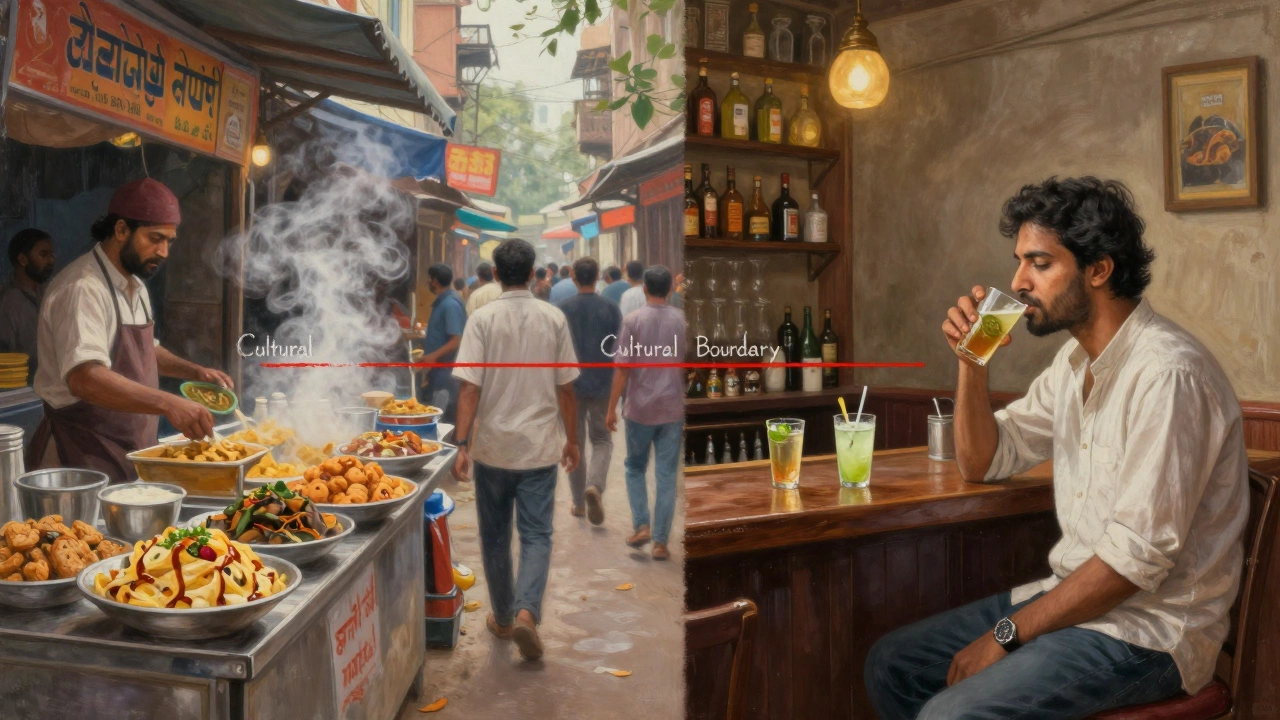
Street food in India is about speed, flavor, and freshness. It’s eaten standing up, on the go, or with friends while chatting. It’s not a sit-down, slow-drink kind of experience. Most Indians don’t drink alcohol while eating street food. It’s not because of religion - though that plays a role in some places - it’s because of culture.
Think of it like this: Would you drink a cold beer while eating a hot, spicy chaat in Delhi? Probably not. The flavors clash. The heat of the food, the tang of tamarind, the crunch of sev - they’re meant to be enjoyed with a cold lassi or nimbu paani. Alcohol doesn’t complement it. It overwhelms it.
Also, street food vendors don’t have refrigerators or licenses for alcohol. They don’t store it. They don’t serve it. If you want to drink, you need to go to a place that’s set up for it. Don’t assume that because you see someone drinking nearby, it’s okay to do the same. That person is probably at a licensed bar.
What Drinks Are Safe and Common for Tourists?
Most tourists stick to what’s familiar: beer, wine, and whiskey. But India has its own drinks worth trying. In Goa, try feni - a strong spirit made from cashew or coconut. It’s local, potent, and unforgettable. In Kerala, toddy (palm wine) is fermented and served fresh. It’s light, slightly sweet, and best drunk the same day it’s tapped.
Beer brands like Kingfisher, Taj Mahal, and Haywards are everywhere. They’re cheap, crisp, and easy to find. Wine is harder to come by, but decent options exist in cities like Pune and Bengaluru. Most hotels stock imported wines, but local brands like Sula and Grover are surprisingly good and much cheaper.
Whiskey is popular, too. Indian-made whiskey like Officer’s Choice and Royal Stag is strong, smooth, and widely available. It’s not Scotch, but it’s what most locals drink. Don’t be surprised if your bartender pours it over ice with a splash of soda - that’s the standard way.
What Happens If You Get Caught Drinking Illegally?
Most of the time, nothing. Police in tourist areas are used to foreigners. They’re more likely to warn you than arrest you. But if you’re loud, disruptive, or in a dry state, things can get serious.
In Gujarat, tourists have been arrested for possessing alcohol. Even carrying a sealed bottle can lead to detention. In Bihar, the rules are strict, and enforcement is growing. In 2024, over 1,200 tourists were fined in Bihar for alcohol possession - mostly for having bottles in their hotel rooms.
Fines range from ₹1,000 to ₹10,000 ($12-$120 USD). In rare cases, you might be held overnight. It’s not common, but it’s possible. The safest move? Don’t risk it. Know the rules before you arrive.
Pro Tips for Drinking in India as a Tourist
- Always carry your passport or government-issued ID. You’ll need it to buy alcohol anywhere.
- Check your destination’s alcohol laws before you go. Google “alcohol laws in [state name] + tourist” - it’s the fastest way to find out.
- Stick to hotels and licensed bars. Avoid buying alcohol from street vendors or unmarked shops.
- Don’t drink and drive. India has zero tolerance for drunk driving. Penalties are harsh, and police set up random checks.
- Respect local customs. In religious areas like Varanasi or Pushkar, drinking in public is deeply offensive. Even if it’s not illegal, it’s rude.
- Carry bottled water. Alcohol can dehydrate you, and street food can upset your stomach. Stay hydrated.
What About Religious and Cultural Sensitivity?
India is home to many religions. Hinduism, Islam, Sikhism, and others have strong views on alcohol. In some communities, drinking is seen as immoral. In others, it’s accepted but kept private. You’ll notice this in small towns and villages. Even in cities, you might see signs saying “No Alcohol” near temples or mosques.
Don’t assume everyone drinks. Many Indians don’t - for religious, cultural, or personal reasons. If you’re invited to someone’s home, don’t bring alcohol unless you’re sure it’s welcome. A box of sweets or fruit is always safer.
When in doubt, watch what locals do. If no one around you is drinking, don’t either. It’s not about judgment - it’s about respect.
Final Thoughts: Can You Drink in India?
Yes - but only if you’re smart about it. India isn’t a place where you can just grab a drink wherever you want. It’s a place where rules change with every border, and culture shapes behavior more than law. The best way to enjoy alcohol here is to treat it like a privilege, not a right.
Drink in hotels. Buy from licensed stores. Keep it quiet. Respect the space around you. And save the street food for when you’re sober - it’s too good to ruin.
Can tourists buy alcohol in India?
Yes, tourists can buy alcohol in most Indian states, but only from licensed stores, hotels, or bars. You must show your passport or government ID. Alcohol is banned in Gujarat, Bihar, Nagaland, and parts of Manipur - no exceptions for tourists.
Is it legal to drink on the street in India?
No, it’s illegal to drink alcohol in public places in most Indian cities. Police can fine you for carrying open containers. Even in Goa, where it’s commonly seen, it’s not officially allowed. Stick to bars and restaurants.
Can I drink alcohol with street food in India?
No. Street food vendors don’t sell alcohol, and it’s culturally unusual to combine the two. Most Indians drink alcohol separately - in bars or at home. The flavors of street food like chaat or pani puri don’t pair well with alcohol, and it’s not the local custom.
What’s the legal drinking age in India?
The legal drinking age varies by state. It’s 18 in Goa, Karnataka, and Maharashtra. It’s 21 in Delhi, Tamil Nadu, and Kerala. In some states like Haryana and Punjab, it’s 25. Always check local laws - your passport doesn’t override them.
Are there any local drinks tourists should try?
Absolutely. In Goa, try feni - a potent cashew or coconut spirit. In Kerala, taste fresh toddy (palm wine). In Rajasthan, look for tharra, a traditional rustic liquor. For beer, Kingfisher and Taj Mahal are popular. For whiskey, Officer’s Choice and Royal Stag are widely consumed and affordable.